With the opening of its first showroom in Mumbai’s BKC on July 15, Tesla made a big entry into the third-largest car market in the world.
This action coincides with a drop in Tesla’s worldwide sales, which fell 6.3% in the United States in Q2 2025, nearly 12% in China, and 6% in Europe for five consecutive months.
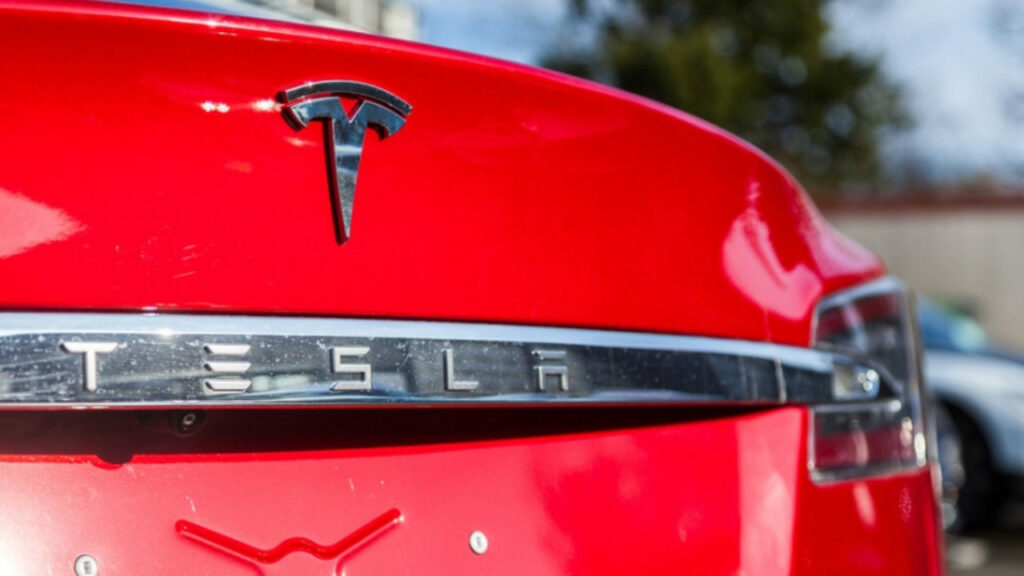
Tesla Enters India Amid Global Slump, Faces Tough Road Ahead
With the United States and China accounting for more than 70% of its revenue, Tesla is now considering India as a new market, but analysts caution that there will be significant obstacles.
Due to import taxes on CBUs, Tesla’s Model Y was priced at ₹60 lakh for rear-wheel drive and ₹68 lakh for long-range in India, which is significantly more than its prices in the US, China, and Europe.
Instead of competing with mainstream electric vehicles, these prices place it against luxury EVs such as the Mercedes-Benz EQB, BMW iX1, Volvo EC40, and Kia EV6.
Jahol Prajapati of SAMCO Securities remarked, “Tesla’s arrival in India has electrified the market… but this won’t be an easy ride.”
He underlined that value is a top priority for Indian EV buyers, pointing out that domestic brands like Mahindra, Tata, and BYD provide models with better or comparable performance and range in the ₹19–30 lakh range.
For example, the BE 6 from Mahindra has a range of 557 km, the eMAX7 from BYD has 530 km, and the Model Y from Tesla has about 500 km, but it costs a lot more.
Without Local Manufacturing, Tesla Struggles to Compete in Price-Sensitive India
It is more difficult for Tesla to lower prices or compete in India’s price-sensitive EV market due to its lack of local manufacturing.
Prajapati noted, “India is not a market that falls for logos. It’s a market that worships value for money.”
Despite the ecosystem’s increasing momentum, Tesla’s mass appeal is limited by the inadequate EV charging infrastructure.
Indian-specific ecosystems, customer trust, and service networks have already been established by regional brands like Tata, Mahindra, and BYD.
Despite Tesla’s entry, Prajapati said Indian EV investors shouldn’t worry: “The entry of a big global player like Tesla will only push more innovation and investment into the space.”
He thinks that leadership in India’s EV market will be determined by factors like affordability, accessibility, and service quality rather than just brand power.
JSW Group chairman Sajjan Jindal echoed this, saying, “He can’t be successful in India! We Indians are here… To be successful in India is not an easy job.”
Both analysts emphasize that dominance in India’s particularly competitive and cost-conscious market is not guaranteed by Tesla’s global brand power.