For decades, science has chased a simpler way to deliver life—seeking to turn needles into something as easy as a pill.
Breaking the Barrier: A New Path for Insulin
For over a century, researchers have attempted to develop an oral form of insulin, but the human digestive system has consistently broken it down before it could work—leaving millions reliant on injections. Now, scientists at Kumamoto University may have found a breakthrough.
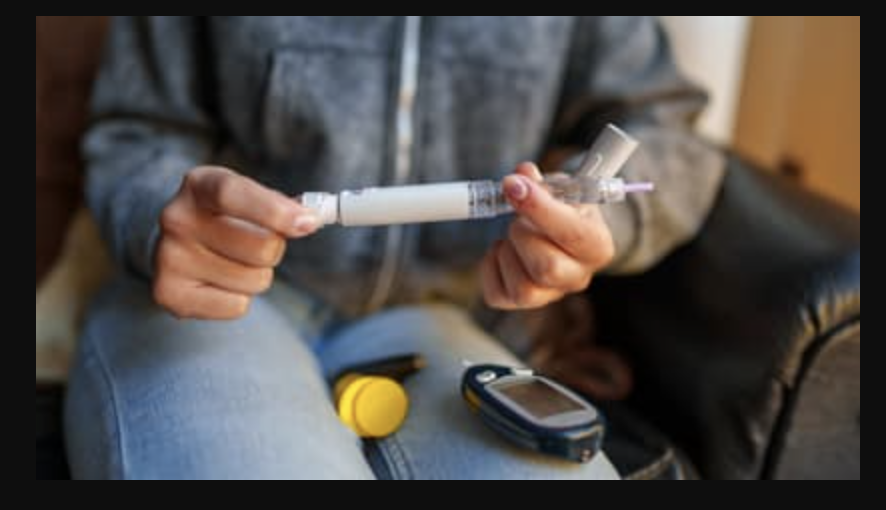
Their approach uses a tiny cyclic molecule called the DNP peptide, which can pass through the intestinal wall and carry insulin into the bloodstream. If successful in human trials, this could become the first effective oral insulin. Currently, insulin remains essential for nearly all patients with Type 1 Diabetes and about 10% of those with Type 2 Diabetes.
Experts see promise in the development. “This is interesting news and gives hope that oral insulin will become available. So far all the oral pills that have been developed, the problem has been its bioavailability,” said Dr V Mohan.
In India, the scale of need is immense. According to the Indian Council of Medical Research, around 101 million people were living with diabetes in 2023, including nearly 9 lakh with Type 1 diabetes, many of them children.
From Lab Success to Real-World Hope
In experiments, researchers tested two methods to help insulin survive digestion and enter the bloodstream. One combined a modified peptide with zinc-stabilised insulin, while another directly linked the peptide to insulin using chemical techniques. Both approaches successfully lowered blood sugar levels in diabetic mice and maintained control with once-daily doses.
A major hurdle in oral insulin development has been the need for very high doses. This new method significantly improves efficiency, achieving bioavailability levels of 33–41% compared to injections—bringing it closer to practical use.
Still, experts urge caution. Results in animals do not always translate to humans. “It needs to be seen whether the experimental oral insulin is as effective and bioavailable in humans,” Dr Mohan noted.
Past efforts, including those by Biocon, have struggled, while alternatives like inhalable insulin—such as Afrezza introduced by Cipla and Mannkind—have seen limited adoption.
Even so, this breakthrough signals renewed hope in a field long marked by setbacks.
If successful, this tiny molecule may carry not just insulin—but the weight of a century’s hope—through the body with ease.
Summary
Researchers at Kumamoto University have developed a peptide-based method to deliver insulin orally, overcoming long-standing challenges of digestion. Tested successfully in mice, it shows improved absorption and lower dosage needs. While human trials are pending, the breakthrough offers hope for millions with diabetes, potentially replacing injections with a simpler pill-based treatment in the future.