When the wheels pause in protest, a city feels the silence in its daily rush.
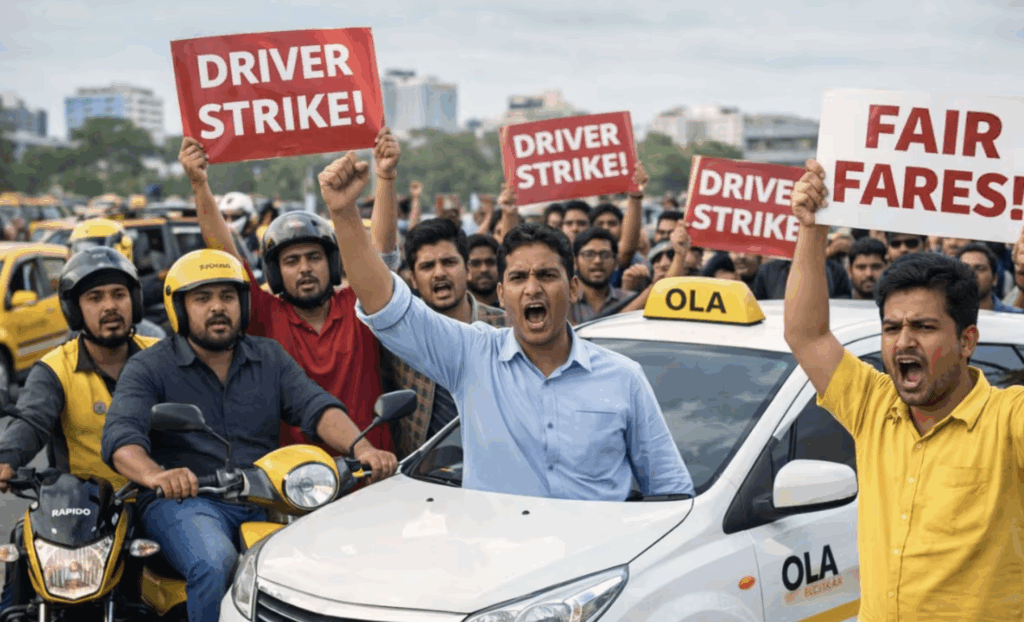
Drivers Demand Fair Fares and Tighter Rules
A nationwide strike by app-based taxi drivers has disrupted ride-hailing services across major Indian cities, as unions press for two key demands — a minimum fare of Rs 25 per kilometre and a ban on private taxis operating under aggregator platforms.
Drivers affiliated with Ola, Uber and other apps say the protest reflects mounting frustration over shrinking incomes, rising fuel prices, maintenance costs, insurance premiums and vehicle loan repayments. They argue that current fare structures, combined with reduced incentives and high commission charges, leave many earning far less despite longer working hours.
The strike has impacted services in Delhi, Mumbai, Bengaluru, Hyderabad, Chennai, Pune and Kolkata, leading to fewer cabs, longer waiting times and inconvenience during peak travel hours.
Unions describe their demands as non-negotiable. The proposed Rs 25 per km minimum fare, they say, is essential to cover operational expenses and restore financial viability. The second demand — restricting private vehicles from operating under aggregators — is aimed at curbing what drivers see as unchecked competition that reduces trip frequency and pushes fares lower.
Disruptions Today, Uncertainty Ahead
Driver representatives claim incomes have steadily declined due to repeated fare cuts and frequent policy changes. Many say they are struggling to meet daily expenses and loan EMIs, with some leaving the profession altogether. Without regulatory intervention, they argue, the current ride-hailing model is unsustainable.
The strike has particularly affected airport routes, railway stations and office districts, with some areas experiencing surge pricing due to limited supply. Commuters have been advised to plan ahead, use public transport, consider carpooling and monitor live cab availability.
Ola and Uber have stated they remain in dialogue with driver partners and aim to balance earnings with rider affordability. However, no formal response has addressed the Rs 25 per km demand or the call for restrictions on private taxis.
Unions have warned that if talks fail, the protest could escalate into longer or coordinated shutdowns. Analysts note that prolonged unrest may prompt regulatory intervention and affect consumer confidence in app-based mobility.
For now, negotiations between unions, companies and authorities will determine whether the wheels resume smoothly — or stall further.
Until fares and fairness find common ground, the road ahead remains uncertain for drivers and riders alike.
Summary
App-based taxi drivers across major Indian cities staged a nationwide strike demanding a minimum Rs 25 per km fare and a ban on private taxis under aggregators. Citing falling incomes and rising costs, drivers disrupted services in cities like Delhi and Mumbai. Companies remain in talks, while unions warn of escalation if demands are unmet.