Nvidia has introduced Alpamayo, a powerful new tech platform designed to advance self-driving cars, as the world’s leading chip-maker intensifies efforts to embed AI into physical products. Announced at the CES conference in Las Vegas, CEO Jensen Huang said Alpamayo will bring “reasoning” to autonomous vehicles, enabling them to think through rare situations, operate safely in complex environments, and clearly explain their driving decisions.
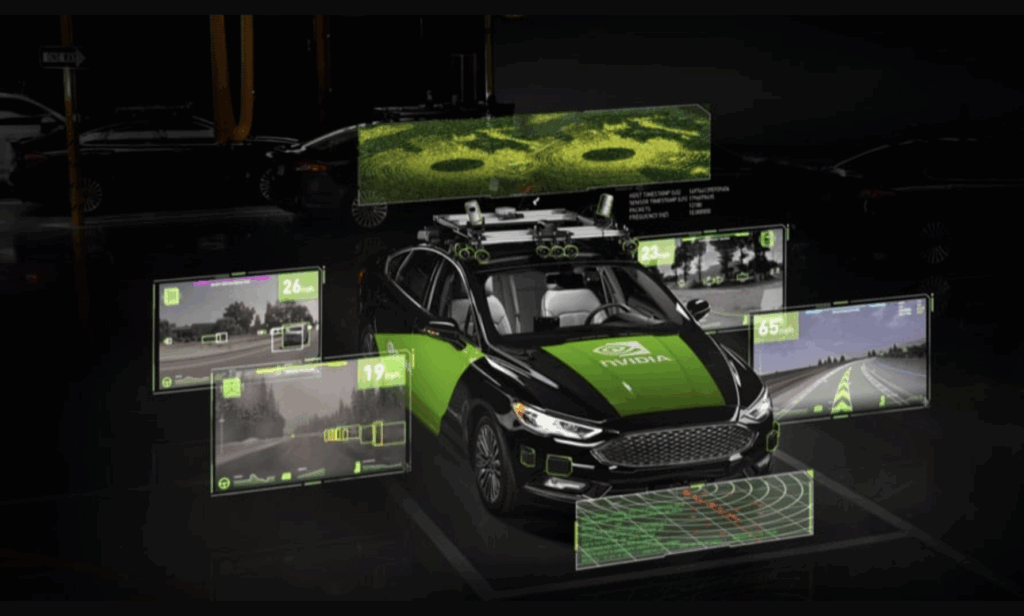
Nvidia is collaborating with Mercedes-Benz to produce a driverless car using Alpamayo, set to launch in the US in the coming months before expanding into Europe and Asia.
Nvidia’s Alpamayo Redefines Autonomous Driving and Physical AI Ecosystems
While Nvidia’s chips have fuelled much of the global AI boom—powering systems like ChatGPT—major technology companies are now shifting focus toward physical AI, meaning real-world devices and machines that integrate advanced AI capabilities. Huang described Alpamayo as a major breakthrough, claiming the industry is nearing the “ChatGPT moment for physical AI.” He noted that the project has taught Nvidia critical lessons about supporting partners as they build robotic and autonomous systems. Analysts, including Paolo Pescatore of PP Foresight, said Alpamayo marks a significant transition for Nvidia from being primarily a compute provider to becoming a platform leader for physical AI ecosystems.
During the presentation, Nvidia showcased a video of an AI-powered Mercedes-Benz navigating San Francisco streets with a passenger sitting hands-free behind the wheel. Huang emphasized that the system drives naturally because it learns directly from human demonstrations yet still communicates its reasoning and intentions in every scenario.
From Open-Source AI to Robotaxis: Nvidia Charts the Future of Autonomous Mobility
Alpamayo is open-source, with its model code available for free on Hugging Face, allowing researchers to retrain and experiment with it. Huang said Nvidia envisions a future where every car and truck is autonomous. The initiative could challenge companies like Tesla, whose CEO Elon Musk noted that while progress to 99% autonomy is easy, solving the most difficult edge cases remains hard. Nvidia also plans to launch a robotaxi service next year with an unnamed partner. Additionally, the company announced that its upcoming Rubin AI chips, offering greater energy efficiency, are in production and will debut later this year.
Summary:
Nvidia unveiled Alpamayo, an AI-driven platform that brings advanced reasoning to autonomous vehicles, developed with Mercedes-Benz. Showcased at CES, the open-source model aims to accelerate physical AI and challenge rivals like Tesla. Nvidia also plans a robotaxi service and will release energy-efficient Rubin AI chips later this year.