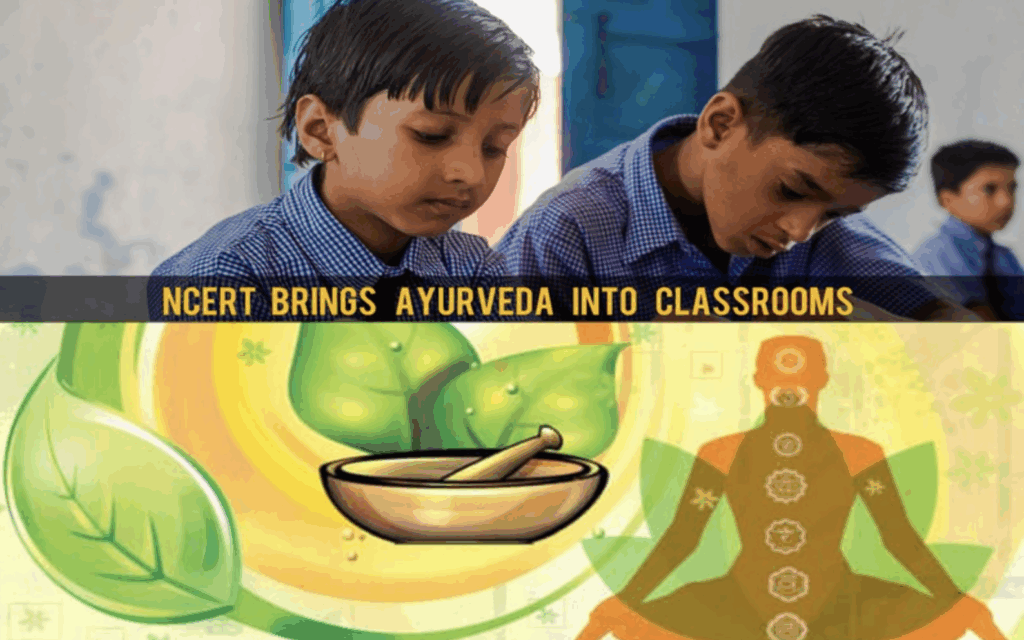
In a landmark move under the National Education Policy (NEP) 2020, the National Council of Educational Research and Training (NCERT) has introduced Ayurveda chapters in the science curriculum for classes 6 and 8. This initiative aims to blend modern science with India’s ancient wellness systems, providing students with a holistic understanding of health, nutrition, and environmental balance.
Learning Health and Science from an Indian Perspective
According to NCERT Director Dinesh Prasad Saklani, the decision is meant to help students gain insights into both scientific reasoning and holistic well-being. The curriculum integrates Ayurveda’s scientific principles in simple, accessible language to help young learners appreciate India’s knowledge traditions alongside modern concepts.
For Class 6, students will study the 20 fundamental qualities of Ayurveda, which describe opposing properties like hot-cold, light-heavy, and mobile-stable. These principles will serve as the foundation for understanding health, nutrition, and natural balance.
Class 8: Connecting Lifestyle and Environment
The Class 8 science textbook will go a step further, introducing the chapter “Ayurveda: Balance of Body, Mind and Environment”, which covers:
- Dinacharya (Daily routine) – promoting healthy daily habits
- Ritucharya (Seasonal discipline) – teaching the importance of seasonal eating and activity patterns
- Balanced living – focusing on harmony between physical, mental, and environmental health
These lessons aim to nurture self-awareness, mindfulness, and respect for nature among students.
Ayurveda Integration Beyond Schools
The inclusion of Ayurveda in school education is part of a larger initiative led by the UGC and the Ministry of AYUSH to integrate traditional medicine into higher education and medical curricula.
AYUSH Minister Prataprao Jadhav emphasized that allopathy and Ayurveda complement each other, and combining them will help India develop a robust, integrated healthcare model.
A Step Toward Knowledge Integration
This educational reform aligns with NEP 2020’s vision of merging India’s cultural and scientific heritage with contemporary education. By exposing students to traditional wisdom early, the NCERT hopes to inspire a generation that values scientific curiosity, holistic health, and sustainable living.