India could soon experience a shortage of LPG (liquefied petroleum gas) as escalating conflict in the Middle East disrupts energy shipments from the Persian Gulf. The crisis has raised concerns about cooking fuel supplies for millions of Indian households that depend on LPG for daily cooking.
Energy traders and industry officials warn that the situation could worsen if shipping routes remain blocked or delayed for an extended period.
LPG Shipments Trapped in the Persian Gulf
The disruption is largely linked to the ongoing geopolitical tensions in the Gulf region, which have affected maritime transport routes for energy supplies. Reports indicate that several LPG cargoes are currently stuck in the Persian Gulf, preventing them from reaching India on schedule.
While global attention has largely focused on crude oil and liquefied natural gas shipments affected by the conflict, experts say LPG shortages could have the most immediate impact on Indian households because it is widely used as cooking fuel.
Why India Is Vulnerable
India is among the largest LPG importers in the world, with a large portion of its supply coming from the Middle East. According to industry data, the country imports over 90% of its LPG requirements from the Gulf region.
This heavy reliance means any disruption in shipping or production in the Gulf can quickly affect domestic supply. If LPG cargoes scheduled for delivery in March are delayed, the country could face a short-term shortage of cooking gas.
Potential Impact on Households
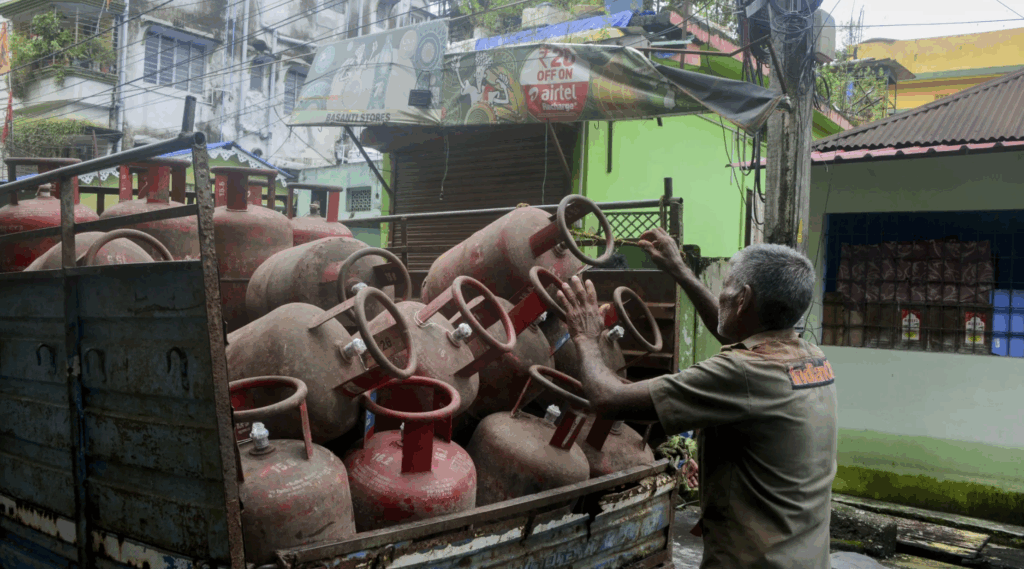
An LPG shortage would directly affect everyday life for millions of families. In India, LPG cylinders are the primary cooking fuel for urban and rural households under schemes such as the Pradhan Mantri Ujjwala Yojana.
Possible consequences include:
- Delayed LPG cylinder deliveries
- Higher cooking gas prices
- Pressure on household budgets
- Increased inflation in essential goods
Because cooking gas is a basic household necessity, even small disruptions can have widespread social and economic effects.
Government Monitoring the Situation
Officials are closely monitoring developments in the Middle East and the status of energy shipments. The government may explore alternative supply routes or additional imports from other countries if disruptions continue.
Energy companies are also assessing stock levels to ensure that domestic demand can be met in the short term.
A Wider Energy Market Concern
The LPG situation reflects broader risks to global energy markets caused by geopolitical tensions. The Gulf region plays a critical role in supplying oil, gas and LPG to many countries, including India.
If the conflict escalates or shipping routes remain restricted, energy prices and supply chains worldwide could face further disruption, potentially affecting fuel markets far beyond the Middle East.