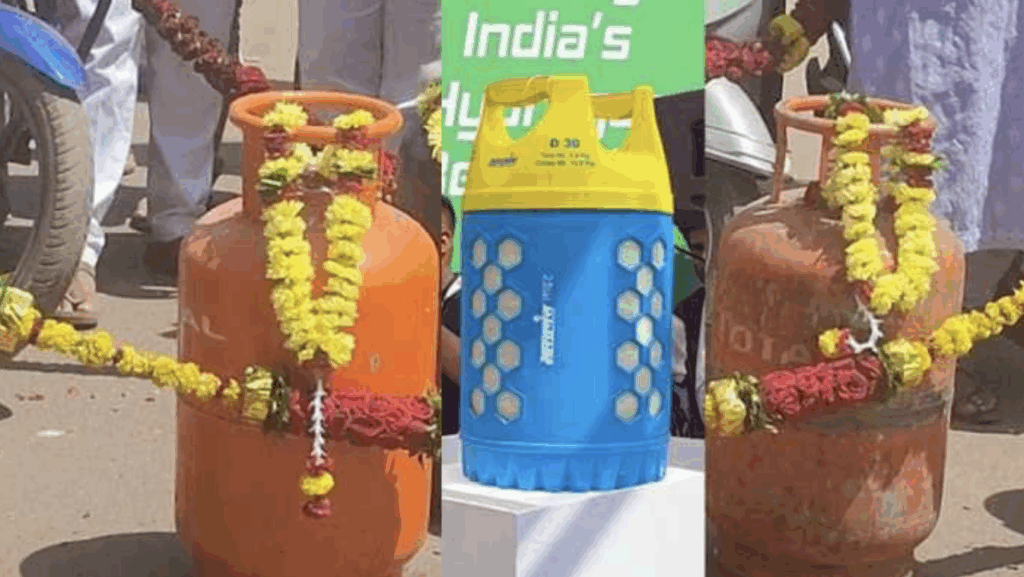
After decades of relying on the classic red steel LPG cylinders for cooking gas, India is introducing a new generation of plastic or composite LPG cylinders designed to offer enhanced convenience, safety, and performance. This marks a significant shift in how domestic cooking fuel is stored and handled across households.
Why Change Was Needed
Traditional steel LPG cylinders, while robust, are heavy, prone to rust and corrosion, and offer little insight into remaining gas levels. These factors make handling and monitoring gas quantity difficult for many users, particularly those who install or change cylinders themselves. Durability and ease of movement have long been concerns for consumers, prompting calls for innovation.
What the New Plastic LPG Cylinders Bring
The new cylinders — such as Bharatgas Lite launched by Bharat Petroleum Corporation Ltd (BPCL) — are made from advanced composite materials rather than metal. This design reduces weight by more than half compared to traditional cylinders of similar LPG capacity, making them far easier to lift and handle. The composite body also does not rust or corrode, boosting long-term durability.
Safety Enhancements
Safety improvements are among the most notable advantages of the new design. Composite cylinders are engineered to withstand high-pressure conditions and, unlike metal cylinders, are less likely to fragment on impact. In the event of external fire exposure, the material is designed to respond in a controlled manner, lowering the risk of sudden rupture.
Smart Visibility and Convenience
A user-friendly feature of these new cylinders is their translucent design, which allows consumers to visually monitor the LPG level without relying solely on weight or guesswork. This helps households plan for refills more accurately and reduces the chances of unexpected gas shortages during cooking.
Initial Launch and Rollout Plans
The lightweight composite LPG cylinders were first launched in Goa, showcased at events such as India Energy Week 2026, with plans for expansion to at least 10 cities, and eventually across major metro areas. Consumers can initially opt to swap existing cylinders under a scheme by paying a nominal additional deposit, while new connections with the composite cylinder carry a specified security deposit.
What This Means for Indian Kitchens
As rollout progresses, millions of Indian households could benefit from easier handling, enhanced safety, and better visibility of gas levels. Over time, these plastic LPG cylinders could become the new standard in domestic fuel storage, improving everyday convenience and safety for users nationwide.