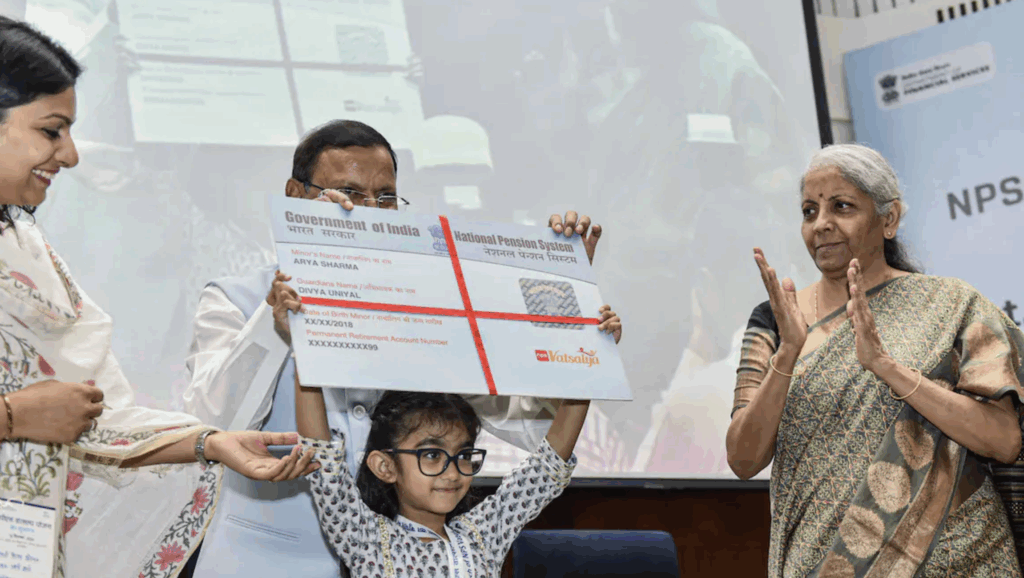
The Government of India has introduced NPS Vatsalya, a new initiative under the National Pension System (NPS) aimed at helping minors start saving early and secure their future, in alignment with the vision of “Viksit Bharat@2047.” This scheme enables parents or legal guardians to invest on behalf of children below 18 years of age, allowing them to develop both financial security and literacy from an early age.
Opening and Managing an NPS Vatsalya Account: Procedure and Guidelines
An NPS Vatsalya account is opened in the child’s name and managed by a parent or guardian until the child turns 18. Upon registration, a Permanent Retirement Account Number (PRAN) is issued. The minimum annual contribution is Rs 1,000, with no upper limit, and funds are professionally managed under PFRDA oversight. Withdrawals are permitted only after a 3-year lock-in period, allowing up to 25% of contributions for essential needs like education, medical treatment, or disability—limited to three withdrawals before age 18. On turning 18, the account automatically converts into a regular NPS Tier-I account, requiring fresh KYC and allowing continued contributions or withdrawal as per standard NPS rules.
Parents or guardians can open an account online via the official eNPS portal or offline at authorized banks or post offices. Required documents include the minor’s and guardian’s Aadhaar, guardian’s PAN card, birth certificate of the minor, and passport-sized photographs. In the unfortunate event of a child’s death, the accumulated corpus is transferred to the guardian, or a new guardian is appointed if both parents are unavailable.
Investment Growth, Tax Benefits, and Financial Discipline in NPS Vatsalya
NPS Vatsalya allows diversified investments across Equity (E), Corporate Bonds (C), and Government Securities (G)—each offering varying risk and return profiles. For long-term growth, higher equity exposure is recommended, as early investments benefit from compound interest. For example, contributing Rs 2,000 monthly from birth at 10% annual return can grow Rs 4.32 lakh into approximately Rs 8.2 lakh by age 18, underscoring the power of starting early.
Contributions qualify for tax deductions under Section 80C (up to Rs 1.5 lakh) and Section 80CCD(1B) (up to Rs 50,000), promoting tax-efficient wealth creation. The 3-year lock-in period encourages financial discipline, teaching children to distinguish between wants and needs, prioritize long-term goals, and appreciate opportunity cost.
Financial Literacy and Empowering the Next Generation through NPS Vatsalya
Beyond wealth accumulation, NPS Vatsalya is a financial education tool. It teaches children about saving, investing, risk, and diversification while preparing them for financial independence. Parents are encouraged to involve children in reviewing statements, set savings goals, and celebrate milestones. By nurturing disciplined savers, NPS Vatsalya contributes to a financially aware generation, strengthening India’s economy and advancing the vision of Viksit Bharat@2047.
Summary:
The Government of India’s NPS Vatsalya scheme helps minors under 18 start saving early, managed by parents or guardians. Accounts grow through diversified investments, benefit from tax deductions, and instill financial discipline. Beyond wealth creation, it teaches children saving, investing, risk management, and long-term planning, fostering financial literacy and independence.