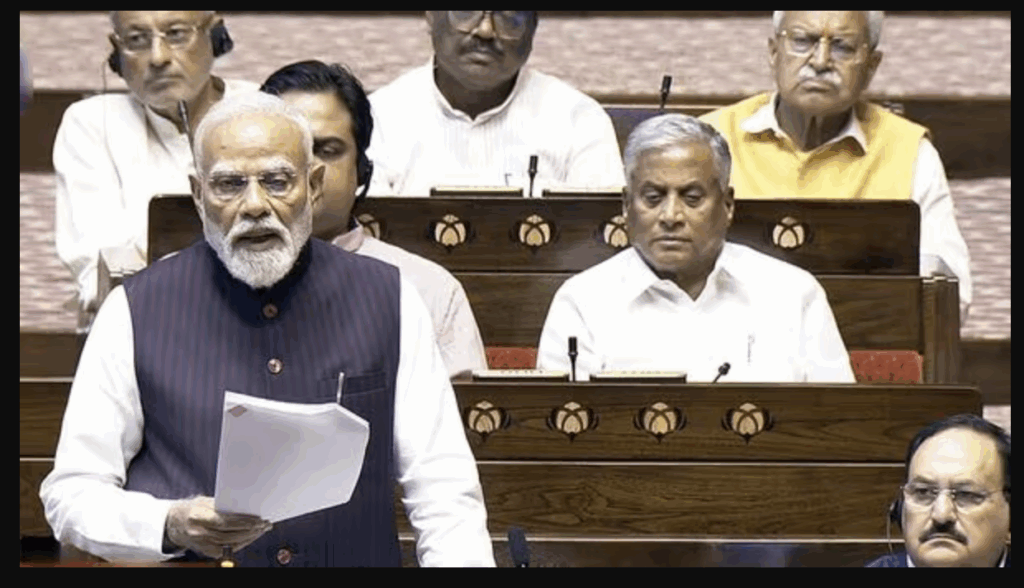
India and the United Kingdom have signed a landmark Comprehensive Economic and Trade Agreement (CETA) to strengthen bilateral trade and economic ties. The agreement was formalized in London, with Prime Minister Narendra Modi and UK PM Keir Starmer witnessing the event. Ministers Piyush Goyal and Jonathan Reynolds signed the FTA, marking a new era of India-UK economic partnership.

Goal: Double Trade to $112 Billion
Currently, the bilateral trade stands at $56 billion, and both nations have set an ambitious goal to double this figure by 2030. The trade agreement is expected to create new jobs, improve market access, and stimulate economic growth on both sides.
99% Duty-Free Access for Indian Exports
The biggest win for India is duty-free access for 99% of its exports to the UK. This move will benefit:
- Textiles and garments
- Leather products
- Agricultural goods
- Jewelry and handicrafts
These sectors, particularly labour-intensive industries, are expected to experience a surge in exports due to the reduced trade barriers.
British Goods Get Cheaper in India
Indian consumers will see price drops in several British goods:
- Whiskey: Import duty will drop from 150% to 75%, and further to 40% over 10 years
- Electric Vehicles: Duties cut from 110% to 10% within quotas
- Premium Cars: Rolls-Royce, Jaguar Land Rover, Aston Martin to become more affordable
- Beauty products, chocolates, lamb, fish, and biscuits will see lower prices
- Medical devices and aerospace components will be cheaper for Indian industries
Limited Impact on Whiskey Prices?
While the reduction in tariffs on alcoholic beverages is being hailed as a game-changer, experts suggest the benefit to consumers may be modest. The price cut on premium whiskies might be limited to around Rs 300 per bottle, with the full benefits unfolding gradually.
Indian Professionals May Gain Too
Apart from trade in goods, the agreement includes provisions for easier mobility for Indian professionals, with smoother visa processes and mutual recognition of qualifications being discussed.
Conclusion
The India-UK FTA is a strategic leap, unlocking new economic opportunities for both nations. While the benefits will take time to fully materialize, sectors like textiles, automotive, alcohol, and med-tech are expected to be the early winners of this landmark deal.