Hyderabad is set to take a big leap in urban mobility with the introduction of driverless pod taxis, a futuristic transportation system designed to improve last-mile connectivity in the city. The project is expected to complement the existing metro network by linking metro stations with IT corridors, business hubs and nearby residential areas.
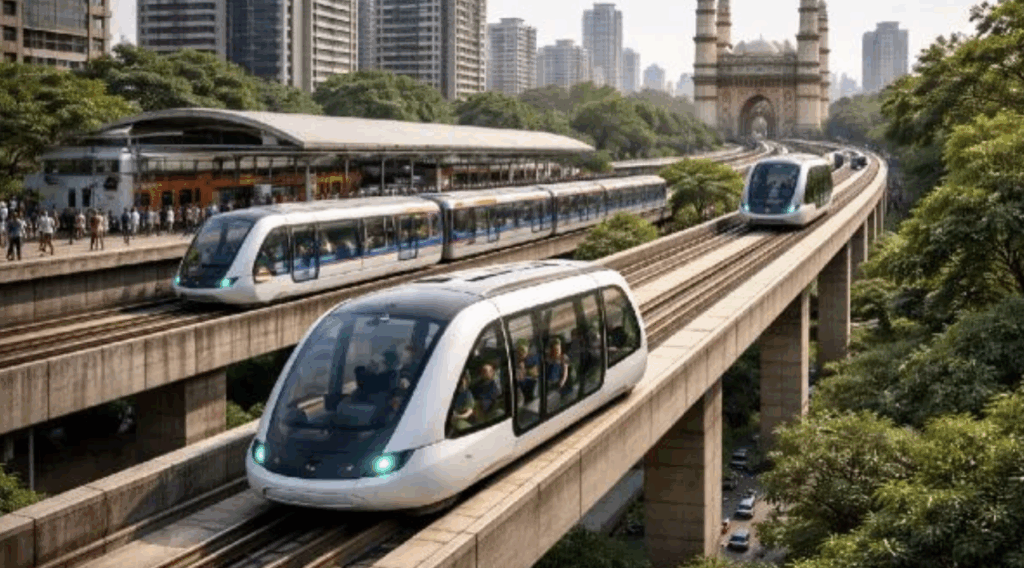
The initiative will use Personal Rapid Transit (PRT) technology, where small automated pods run on dedicated elevated tracks, allowing passengers to travel quickly without being affected by road traffic.
What Are Pod Taxis?
Pod taxis are compact driverless electric vehicles that run on specially built guideways above ground. Unlike buses or trains, these pods operate on-demand and point-to-point, meaning passengers can travel directly to their destination without intermediate stops.
Each pod is expected to accommodate around 4 to 8 passengers, making them ideal for short-distance urban travel.
The system will be fully automated, using GPS navigation and advanced control technology to ensure smooth and safe operation.
Speed and Capacity
The upcoming pod taxi network is designed to deliver quick and efficient transportation across busy urban corridors. Key specifications include:
- Speed: Around 30–60 km/h, depending on the route and traffic demand
- Capacity: About 4–8 passengers per pod
- Passenger handling: Up to 10,000 commuters per hour during peak periods
- Technology: Fully automated, electric and zero-emission pods
Because the pods run on elevated tracks, they can bypass road congestion and provide faster travel compared to traditional transport.
Proposed Routes and Connectivity
The first phase of the project will focus on Hyderabad’s western IT corridor, where traffic congestion is often severe. Priority corridors expected to benefit include:
- Hitec City Metro Station to Knowledge City
- Raidurg Metro Station to Financial District
- Connections to major tech parks and residential clusters
- Possible links toward T-Hub and Kokapet Neopolis
These routes are designed to help tech professionals and commuters travel quickly between offices, metro stations and residential areas.
How the Project Will Be Implemented
The pod taxi project is expected to be developed through a Public-Private Partnership (PPP) model under the Design-Build-Finance-Operate-Transfer (DBFOT) framework. Global consultants have been invited to conduct feasibility studies before final implementation.
Officials believe the system will significantly improve last-mile connectivity, which remains a major challenge even in cities with metro networks.
A Step Toward Smart Urban Mobility
If successfully implemented, Hyderabad’s pod taxi system could become a model for smart urban transport in India. With its driverless technology, electric propulsion and ability to bypass traffic congestion, the system promises to deliver faster, cleaner and more efficient mobility.
As Hyderabad continues to grow as a global technology hub, innovations like pod taxis could play a crucial role in shaping the city’s next generation of urban transportation.