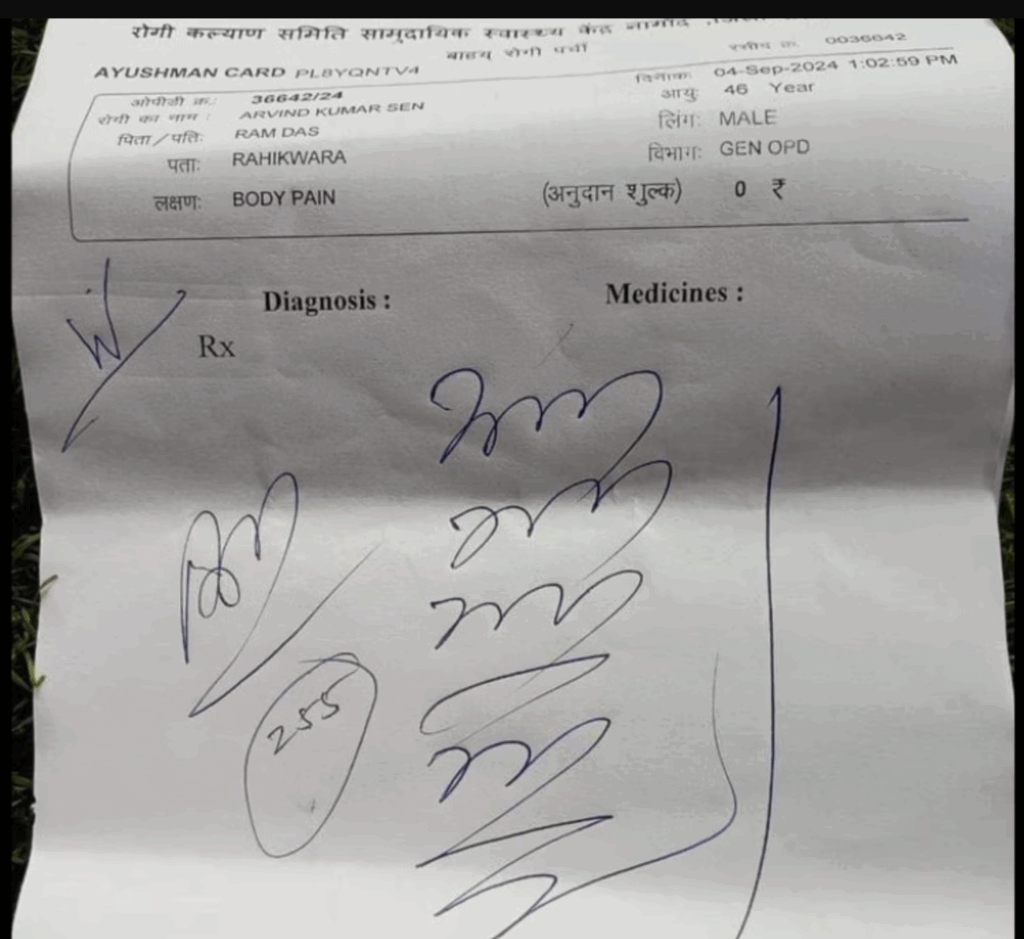
In a landmark ruling, the Punjab and Haryana High Court declared that a legible medical prescription is a fundamental right, after reviewing a medico-legal report so incomprehensible it “shook the conscience” of the court. Justice Jasgurpreet Singh Puri directed the government to digitise prescriptions within two years and, until then, mandate that doctors write clearly in capital letters.
A Recurring Judicial Concern
This is not the first time Indian courts have criticised doctors’ handwriting. The Odisha High Court earlier flagged “zigzag writing styles,” while the Allahabad High Court lamented reports “so shabby they were indecipherable.” Courts have repeatedly emphasised that prescription clarity isn’t about aesthetics — it’s about preventing fatal medical errors caused by ambiguity or misinterpretation.
Deadly Consequences of Sloppy Writing
Illegible prescriptions have been linked to serious — even fatal — consequences globally. A 1999 Institute of Medicine (IoM) report estimated 44,000 preventable deaths annually in the US due to medical errors, with 7,000 attributed to poor handwriting. In Scotland, a woman suffered chemical injuries after being given erectile dysfunction cream instead of eye medication. UK authorities estimate that digitised prescriptions could cut drug errors by up to 50%.
India lacks comprehensive data, but incidents abound: a patient once suffered convulsions after receiving diabetes medication instead of a painkiller, and a three-year-old girl died after being injected with the wrong drug.
Push for Reform — But Problems Persist
Pharmacist Chilukuri Paramathama, who petitioned the Hyderabad High Court in 2014 following a child’s death due to a misread prescription, helped push a 2016 Medical Council of India directive requiring prescriptions to be written legibly, preferably in capital letters. In 2020, the government empowered state medical authorities to discipline violators.
Yet nearly a decade later, poorly written prescriptions remain common. Pharmacists like Ravindra Khandelwal of Kolkata’s Dhanwantary pharmacy say many handwritten prescriptions remain difficult to interpret, particularly in rural and suburban areas, forcing staff to call doctors to verify details.
A Call for Urgent Change
Experts agree that digitisation and stricter enforcement are crucial. The court’s ruling underscores that clear communication is not a courtesy — it’s a patient’s right. As healthcare grows more complex, ensuring prescriptions are legible could mean the difference between effective treatment and a medical tragedy.