A silent yet significant development is shaping across the country’s mobile voice ecosystem as the users across multiple telecom circles have started reporting that HD Voice, typically limited to calls within the same network, is now appearing during calls between Reliance Jio and Bharti Airtel.
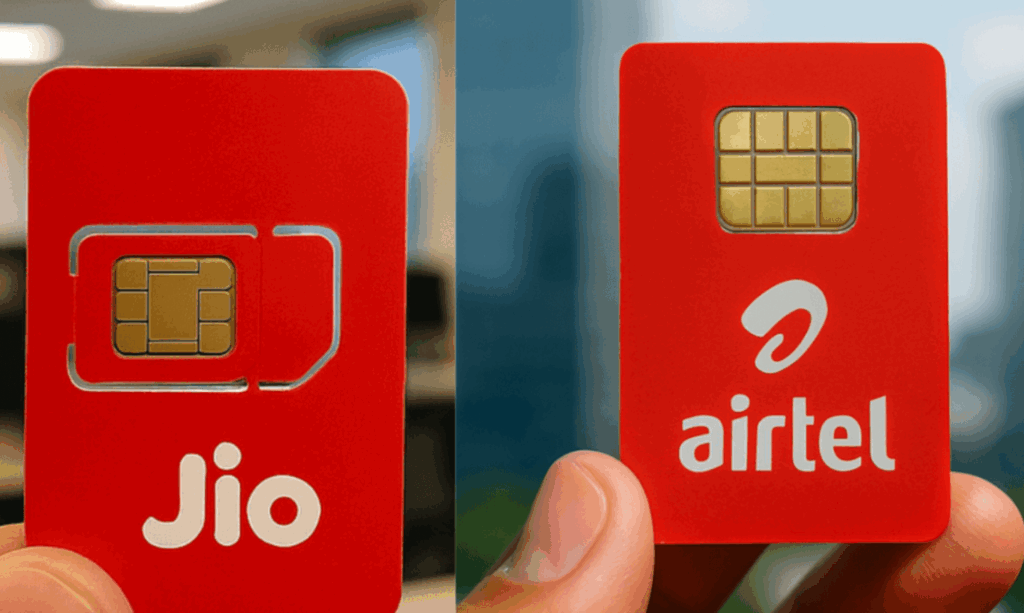
Jio, Airtel Enabling Cross Network HD Voice Call
So far, it is not confirmed yet, but once that happens, it would mark one of the most important improvements in inter-operator voice quality since VoLTE became mainstream.
The HD/VoLTE calling (powered by AMR-WB codecs) has worked only within a single operator’s network traditionally.
As we know that Jio-to-Jio and Airtel-to-Airtel calls have long supported HD Voice while offering clearer sound, faster call setup, and better stability.
But it usually fell back to narrowband voice during cross-network calls, especially Jio to Airtel to Jio, often routed through legacy interconnect systems that did not support wideband audio.
Now it has changed as users in several circles have noticed something different over the last few weeks.
Reportedly, the HD/VoLTE icon which typically appears only on same network calls is now lighting up even during calls from Jio to Airtel and vice versa.
Saveral users have reported consistent HD indicators, not just isolated instances, suggested that both operators may be testing or gradually enabling wideband voice across their interconnect layers.
If the deduction is true that this would indeed mark a major step forward for both user experience and India’s broader telecom evolution.
Cross-network HD voice requires upgraded IP interconnect, more harmonized VoLTE signalling, and alignment between operators on codec negotiation.
Although, this is common in some global markets, but India so far lacked nationwide cross-operator HD calling due to legacy interconnection paths and differing implementations of VoLTE.
What Are The Benifits Of Cross-operator HD Calling?
This shift could offer several benefits as the users would enjoy significantly improved call quality regardless of the network they are calling.
When it comes to India, so far Jio and Airtel holding the majority of countries mobile subscribers.
So, enabling HD between these two would instantly impact hundreds of millions of daily calls.
Besides this, it would reduce the dependence on fallback technologies like 2G, especially in circles where operators are shutting down legacy networks.
It would also align with a larger global trend of operators moving toward fully IP-based calling environments with higher reliability and richer audio.
Moving ahead none of the operators has issued any official announcement or public statement indicating such a rollout.
So it won’t be an exaggeration to say that these changes are occurring silently, being a part of wider interconnect modernization efforts.
When it comes to these kind of features, the operators often conduct phased tests across select circles before enabling them nationwide.
There is no doubt that this initiative is signaling the beginning of a new era for Indian mobile voice quality pertaining to the fact if Jio and Airtel are indeed enabling wideband audio across networks.