If your phone suddenly shows a name you never saved when someone calls, it is not a glitch—it’s India’s new CNAP (Calling Name Presentation) system being tested nationwide. Unlike Truecaller, which relies on crowdsourced data, CNAP displays the Aadhaar-linked name of the caller before switching to your saved contact label.
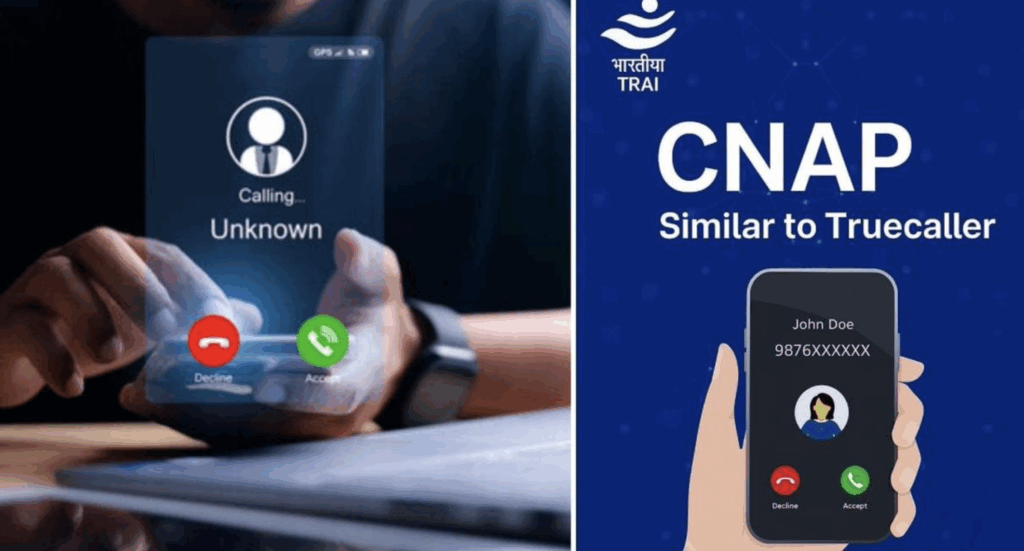
The government approved the CNAP portal last month, and telecom operators have now begun enabling the service in select circles.
How CNAP Works on Your Phone
When you receive a call, your device will:
- Display the Aadhaar-linked name registered with the SIM.
- Then switch to your saved contact name, if available.
So even if you saved someone as “Mom,” “Boss,” or “Plumber,” the first name you see is their government-verified identity.
This is meant to help users immediately recognise unknown callers without relying on third-party apps, particularly in cases of spam, fraud, or business calls.
Why India Is Rolling Out CNAP Now
The government’s goal is simple:
To make caller identification accurate, trustworthy, and verifiable.
Existing solutions like Truecaller or phonebook-based detection often show:
- Crowdsourced names
- Misspelled or outdated entries
- Inconsistent identities
CNAP eliminates guesswork by pulling from official documentation used during SIM registration, creating an authentication layer backed by the government.
Telecom operators have already activated the system for a subset of users, and more regions will follow as infrastructure upgrades continue.
Impact on Spam Control and Digital Safety
CNAP is expected to:
- Reduce spam and robocalls
- Help identify fraud attempts more clearly
- Increase user trust in answering unknown numbers
- Improve accuracy in business and professional communication
In sectors like banking, logistics, and customer support, verified caller identity could significantly reduce scams.
Privacy and Accuracy Concerns Emerge
While CNAP promises transparency, it also raises critical questions:
- Can users update the name shown via CNAP?
- What happens if Aadhaar data is outdated?
- Will all callers be comfortable revealing their legal identity by default?
- How will telecom operators secure access to the name database?
These issues will surface more prominently as the system transitions from testing to nationwide rollout.
India’s Caller ID Experience Is About to Change
With CNAP now appearing on more devices, India is entering a new phase of caller identification—verified, regulated, and far more transparent than before. As the test phase expands, users can expect smoother adoption and clearer guidelines on privacy and name management.