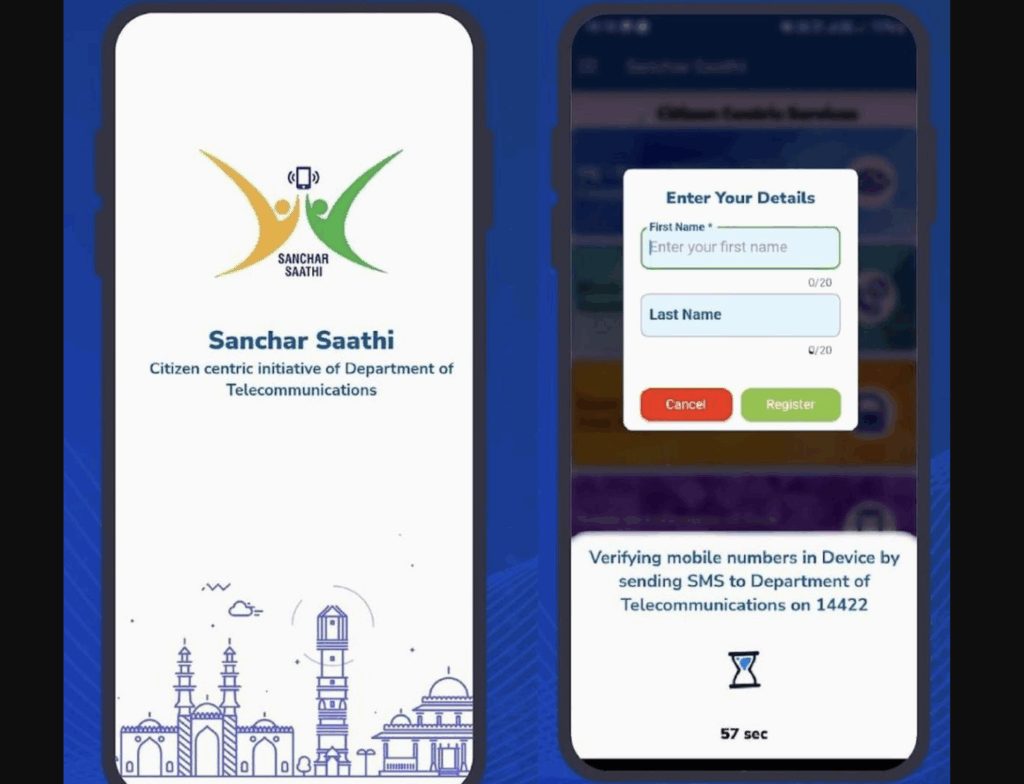
India has issued a sweeping new directive requiring all smartphone manufacturers to pre-install the government’s cyber safety app, Sanchar Saathi, on every new device sold in the country. While the move aims to curb mobile-related fraud and track stolen devices, it has triggered widespread concerns over digital privacy and potential surveillance.
What the Government Has Ordered
The Department of Telecommunications (DoT) has mandated that:
- Every smartphone manufactured or imported into India within the next 90 days must come with the Sanchar Saathi app pre-installed.
- The app must be non-removable, non-disableable, and clearly visible during device setup.
- Phone makers must also attempt to add the app through software updates for unsold inventory already in the supply chain.
- Compliance reports must be submitted within 120 days.
The order is aimed at strengthening telecom cybersecurity in a market with 1.2 billion+ mobile subscribers and a large second-hand device ecosystem.
Why the Government Says It’s Necessary
Sanchar Saathi, launched earlier this year, enables users to:
- Check IMEI authenticity
- Block or track stolen phones
- Report fraudulent communication
The government says duplicate or spoofed IMEIs pose a “serious cyber risk” and facilitate crimes such as mobile cloning, scams, and the reselling of stolen devices. Officials claim the platform helped recover over 7 lakh lost or stolen phones, including 50,000 in October 2025 alone.
Privacy Experts Raise Red Flags
Despite its stated purpose, the directive has drawn sharp criticism:
- Internet Freedom Foundation (IFF) argues the requirement turns every smartphone into “a permanent, non-consensual access point” for the state.
- Experts highlight that the app requests extensive permissions—from camera to storage—raising questions about potential surveillance.
- The non-removable nature undermines operating system safeguards designed to prevent one app from accessing another’s data.
Technology analysts also note that the order contradicts existing policies of global smartphone makers, especially Apple, which historically refuses government-mandated pre-installs. Reuters reports that Apple does not intend to comply and will raise its objections with the government.
A Global Trend of Tighter Device Control
India is not alone. In August, Russia required all devices to come pre-loaded with the state-backed MAX messenger app, triggering similar fears over user tracking and privacy erosion.