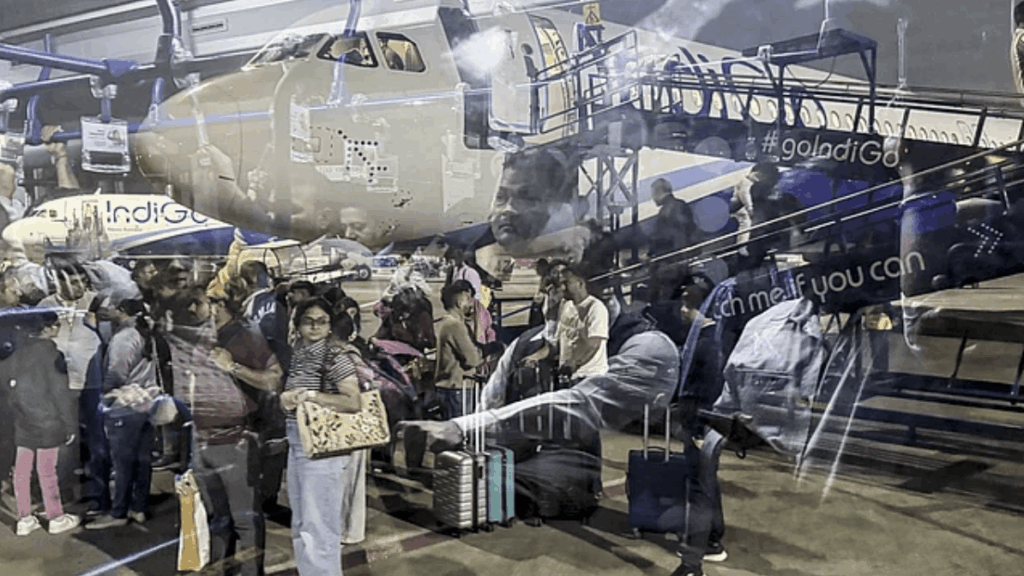
India’s aviation sector is witnessing one of its most disruptive weeks in years. With over 1,000 IndiGo flights cancelled—more than half the airline’s schedule—the government has put the new Flight Duty Time Limitation (FDTL) norms on hold with immediate effect, hoping to restore normalcy by December 15.
But the move has triggered a sharp divide between regulators, pilots, and passenger advocates.
Mass Disruptions Force Emergency Rollback
IndiGo’s operations collapsed this week, with zero departures from Delhi on Friday and severe cancellations in major metros.
To limit chaos, the airline has offered full waiver on cancellations and rescheduling from December 5–15.
However, the shockwaves hit markets too—IndiGo’s parent InterGlobe Aviation lost ₹20,000 crore in market value in just a week, even as competitor SpiceJet gained.
The airline admitted its network collapse “shook customer confidence”, while promising a return to stability between December 10–15.
Government Intervention: Passenger Relief vs. Pilot Fatigue
IndiGo sought exemptions from Phase II of FDTL norms—especially restrictions on night landings—claiming it needed time till February 2026 to stabilise.
The government responded by suspending the norms temporarily, saying it was acting “solely in the interest of passengers”.
A four-member DGCA committee will now probe the circumstances behind the collapse and examine whether IndiGo failed to prepare despite a two-year transition period.
To assist recovery, DGCA even offered its own Airbus A320-rated flight inspectors to operate IndiGo flights—an unprecedented step.
Pilot Community Slams Decision as “A Safety Rollback”
The Indian pilot community has reacted fiercely.
The Airline Pilots’ Association of India (ALPA) called the exemption “a serious compromise of fatigue protections”, accusing regulators of creating a double standard to benefit one airline.
Key objections include:
- Longer allowed duty hours
- Relaxed definition of night flying
- Doubling of permissible near-night landings
- Reduced rest periods
ALPA argues these decisions violate scientific fatigue-management principles, undermine ICAO norms, and put “millions of passengers at higher risk”.
The union also questioned why disruptions exploded 35 days after the new norms began—suggesting an “engineered crisis” to force a rollback.
A Sector at Crossroads
With fog season, holidays and wedding travel ahead, the aviation industry is under enormous strain.
The government insists there will be no compromise on safety, but pilot unions warn fatigue-related risks could rise sharply.
Whether the temporary rollback stabilises operations—or deepens mistrust between pilots, airlines, and regulators—will decide the trajectory of India’s aviation safety culture.