The Union Government has given its approval for a high-speed rail corridor in Kerala, marking a major shift in the state’s rail infrastructure plans. The decision ends years of debate over the long-pending SilverLine project and places the project on a fresh, more feasible trajectory.
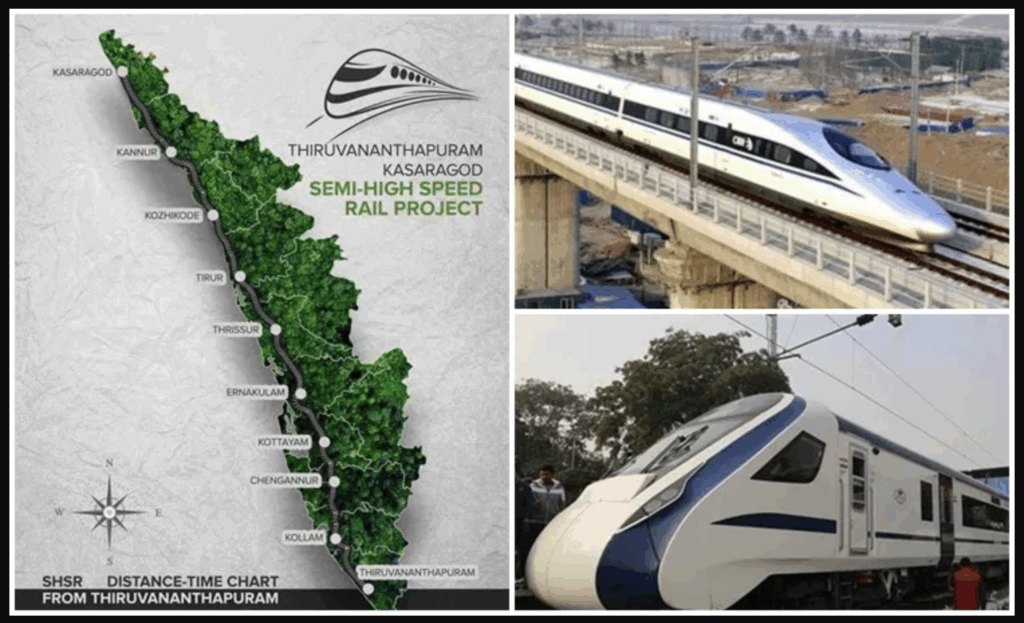
DMRC Entrusted With Planning and DPR
Former Delhi Metro Rail Corporation (DMRC) head and engineering expert E. Sreedharan, often referred to as “Metro Man,” will steer the initial phase of the project. The DMRC has been tasked with preparing the Detailed Project Report (DPR), which Sreedharan has said will be ready within nine months. The report will outline alignment, design features, cost estimates and implementation strategy for the corridor.
The decision followed detailed discussions between Sreedharan and Union Railway Minister Ashwini Vaishnaw in New Delhi, as well as consultations with Kerala Chief Minister Pinarayi Vijayan. The Kerala government has welcomed the move, considering it a key step toward addressing the state’s long-standing transport challenges.
Replacing the SilverLine With a Modern Rail Vision
The new high-speed rail link will replace the controversial SilverLine project, which faced criticism over land acquisition, environmental concerns and cost overruns. Sreedharan has emphasised that the new plan will differ fundamentally in design, land requirements and execution philosophy, making it more viable and less disruptive.
Under the new vision, the corridor will cover a significant north-south stretch of Kerala, with the first phase proposed from Thiruvananthapuram to Kannur — an alignment that reflects Kerala’s extensive geographic spread and need for efficient inter-city connectivity.
Features and Expected Benefits
Reports indicate the project will draw inspiration from Regional Rapid Transit Systems (RRTS) like the Delhi–Meerut line, using lighter, standard-gauge trains capable of high speeds and frequent intervals. The rail line will be largely elevated, with limited underground sections, significantly reducing the amount of land required compared with earlier proposals.
Once operational, the corridor is expected to transform intercity travel across Kerala, slash journey times, reduce road congestion and enhance safety — a pressing concern in a state with some of India’s highest road accident rates.
What Happens Next
With the DPR process underway, preliminary planning offices and resources are being mobilised, and stakeholders anticipate efficient studies and stakeholder consultations. Once the DPR is completed, the project will enter detailed design and funding stages, including possible investment models and phased execution.
By entrusting the project to the DMRC and E. Sreedharan, the government aims to leverage proven expertise in urban and rapid rail systems to deliver a modern, cost-effective and citizen-friendly high-speed rail network for Kerala.