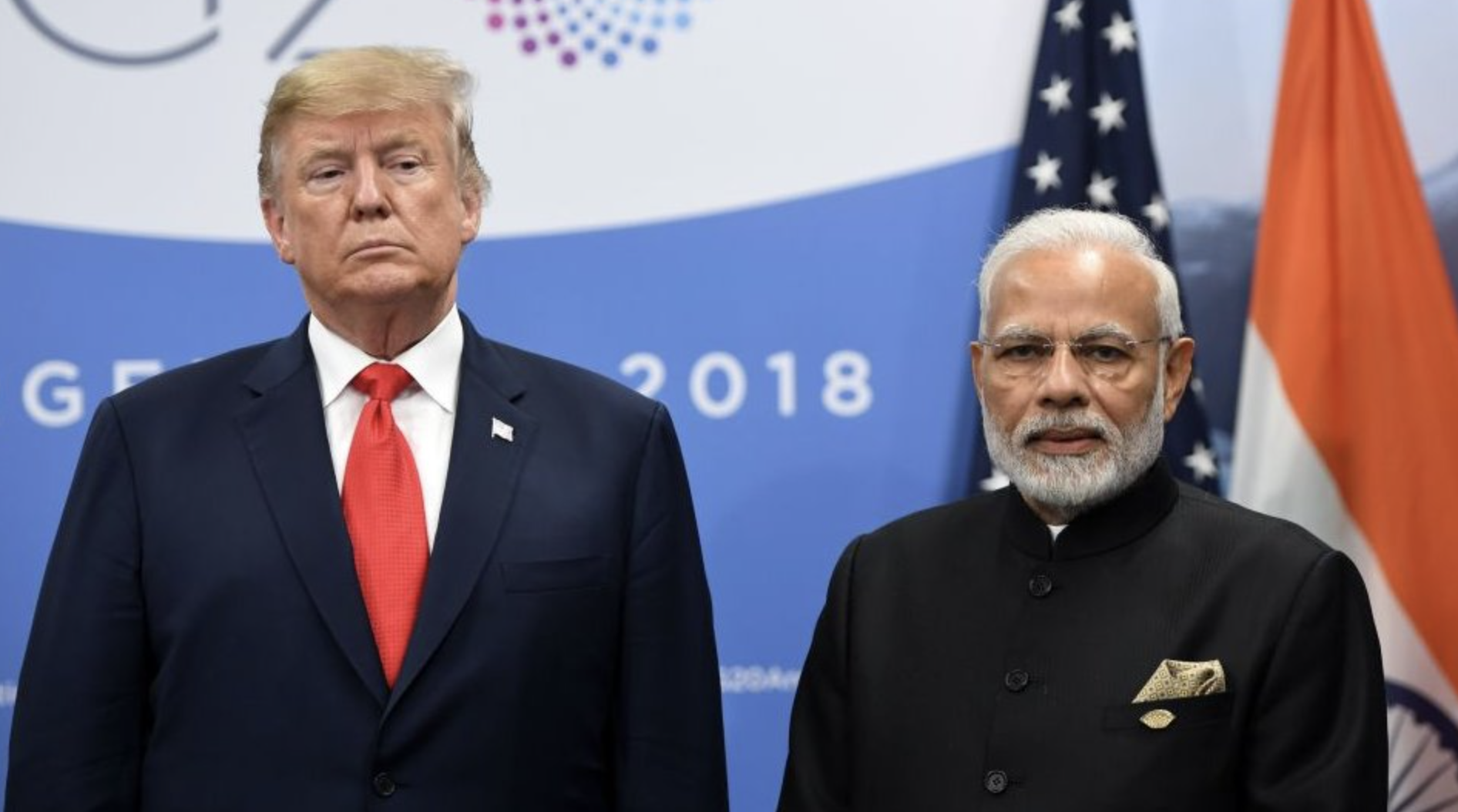
India’s exports to the United States, its largest trading partner, declined 22.2% between May and August 2025, falling from $8.8 billion to $6.9 billion, according to a report by the Global Trade Research Initiative (GTRI). The sharpest contraction was seen in tariff-exempt sectors, which shrank 41.9%. Smartphone exports, India’s single largest item to the US, collapsed 58% to just $964.8 million despite enjoying zero duty. Before the tariff hikes, India had rapidly gained share in the US smartphone market, rising to 44% in April–June 2025 from 13% a year earlier, Canalys reported.
Rising US Tariffs Hit India’s Labour-Intensive Exports, Spur Sectoral Declines
The decline coincides with Washington’s tariff escalation, which rose from 10% to 25% in early August, and then to 50% by month-end. Commerce Minister Piyush Goyal is in the US this week to meet Trade Representative Jamieson Greer on the sidelines of the UN General Assembly, where trade talks are expected to feature prominently. Despite the slump, overall bilateral trade hit a record $132.2 billion in FY25, with India enjoying a $40.82 billion surplus.
Labour-intensive sectors, which form 62.7% of India’s exports to the US, were heavily hit. Shipments fell 10.8% to $4.3 billion. Jewellery exports slid 9.1%, with diamond-studded gold jewellery plunging 25.5% and cut and polished diamonds down 15.2%, adding pressure on Surat’s industry. Solar panel exports dropped 34.6% as India faced steeper tariffs than China and Vietnam. Seafood shipments fell 43.8%, threatening jobs in coastal hubs, while textiles and garments declined 9.3%. Chemical exports fell 15.9%, led by agrochemicals, insecticides, and herbicides, which contracted 26.7%. Agricultural products also weakened: processed food fell 13.9%, cereals 7.2%, dairy 31.1%, and edible oil nearly 70%.
Metals and Auto Components Show Resilience, but Deeper Export Declines Loom Ahead
Some sectors showed resilience. Metals and auto components fell only 4% to $600 million, with aluminium and steel dropping more sharply, while auto components slipped just 2%. GTRI noted this was due to uniform tariffs across suppliers, with demand weakness in the US driving the decline rather than loss of competitiveness.
Analysts warn September will fully reflect 50% tariffs across key categories, potentially deepening the downturn in textiles, jewellery, chemicals, shrimp, and solar panels.
Summary:
India’s exports to the US fell 22.2% between May and August 2025 to $6.9 billion, hit by steep tariff hikes. Smartphones plunged 58%, while labour-intensive sectors like jewellery, seafood, textiles, chemicals, and agriculture saw sharp declines. Metals and auto components proved relatively resilient, though deeper contractions are expected in September.