India’s power system is undergoing a “paradigm shift” as AI-driven data centres rapidly expand, impacting grid operations, according to Samir Chandra Saxena, Chairman of Grid India.
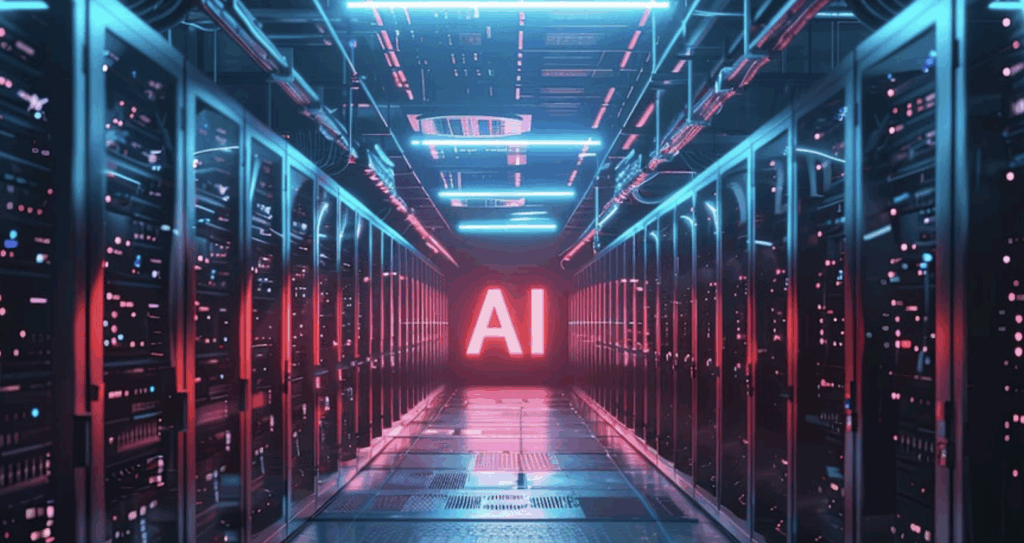
AI requires substantial electricity, and India’s current data centre capacity of 1.2 GW is expected to grow fourfold by 2030 due to AI demand.
India’s Power System Faces Major Shift as AI-Driven Data Centres Surge in Demand
This expansion will create complex, dynamic loads on the grid, requiring major changes in grid planning and management.
Data centres will increasingly place high demands at the transmission level, as traditional sub-transmission may not meet their needs.
Saxena noted that data centres can experience sharp, unpredictable fluctuations in energy demand, which could cause disturbances if they suddenly disconnect from the grid.
He emphasized the need for planned infrastructure to handle such fluctuations, as the grid cannot absorb all these risks.
Saxena stressed the importance of resource adequacy, including both primary energy and reserves, to meet the large demand from data centres.
Due to AI’s unpredictability, Saxena suggested that these demands need to be managed on the demand side rather than overburdening the grid.
Many regions globally require data centres to include their own power generation, and Saxena believes India should evolve its standards to manage this new challenge.
CEO of BSES Warns Rapid Expansion of Hyperscale Data Centres Could Strain India’s Power Grid
Abhishek Ranjan, CEO of BSES Rajdhani Power Limited, warned that rapid expansion of hyperscale data centres could overwhelm the grid if not carefully planned, especially since each hyperscale facility can require up to 1 GW of power.
Ranjan suggested that both central and state transmission operators must plan where high-voltage substations are needed to accommodate such demand.
Data centres also need stable, long-duration power sources, and Ranjan recommended a mixed approach, including battery storage and renewable energy, since India has not yet scaled up its nuclear capacity.
He also proposed that the Central Electricity Authority should create a national plan to identify optimal sites for data centres, avoiding chaotic development.
Deepesh Nanda from Tata Consultancy Services highlighted the potential of renewable energy through open access, which allows large consumers to buy power directly from suppliers.
Intel’s Saumer Phukan mentioned how innovations in chip technology could help reduce power consumption in AI-driven applications, including advancements that lower operating voltage and improve efficiency.
Phukan advocated for a “heterogeneous AI” approach, where not all workloads need power-hungry GPUs, reducing overall energy demand.
Karthik Krishnan from Amazon Web Services noted that AI adoption in India is still in its early stages, offering a window to address future challenges.
For large data centres, Krishnan emphasized the importance of reliable power, access to renewable energy, regulatory clarity, and long-term price stability when choosing locations.