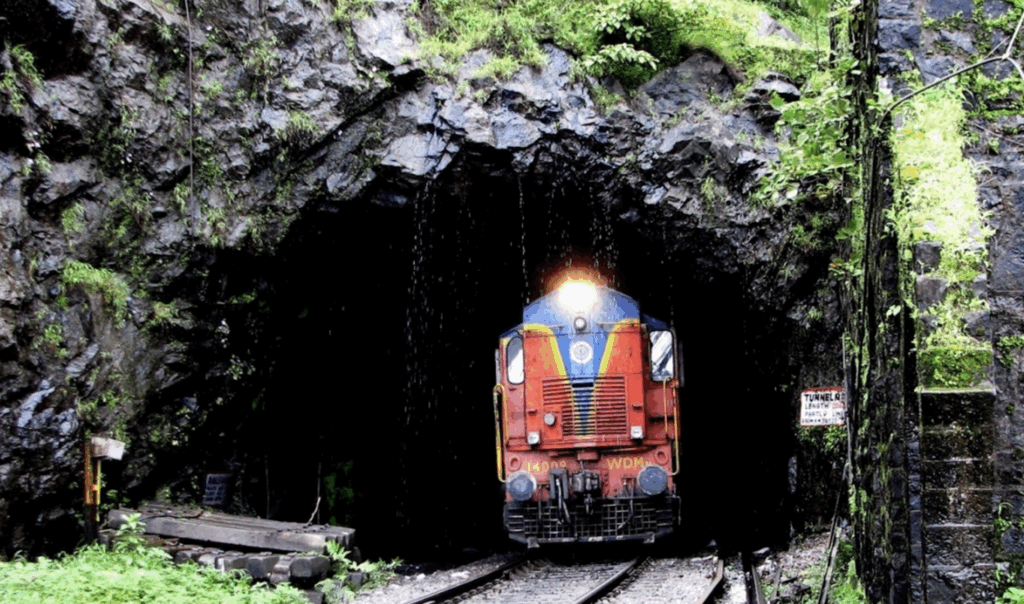
Frustrated by poor train connectivity and worsening highway congestion, thousands of Pune-Mumbai commuters are pushing for hourly rail services connecting the two major cities. The current options, including the Deccan Queen, Intercity Express, and Koyna Express, operate with limited frequency—forcing travellers to depend on road travel, which is increasingly unreliable due to heavy traffic and frequent accidents.
Ganesh Yelwande, a daily commuter from Talawade, said, “If the frequency is increased, it will help frequent travellers like us. Right now, the timing gaps are just too big.”
Commuters Cite Delhi’s RRTS as the Ideal Model
Many believe the solution lies in adopting a Regional Rapid Transit System (RRTS) similar to Delhi’s Delhi-Meerut corridor. The RRTS model offers semi-high-speed trains running at up to 180 km/h on dedicated elevated tracks, ensuring congestion-free and predictable journeys.
Nilesh Langhi, a Pimple Nilakh resident who travels to Mumbai for work, said, “A semi-high-speed corridor like RRTS connecting Mumbai and Pune would transform travel and contribute immensely to the state’s economy.”
The Delhi-Meerut RRTS, spanning 82 km and costing over ₹30,000 crore, already connects several key points with 11 stations. A similar approach for Maharashtra could redefine regional commuting patterns.
Boosting Business and Reducing Economic Friction
Frequent travellers, traders, and entrepreneurs say inconsistent train schedules affect business operations.
Rupesh Ambekar, a civil contractor from Dighi, said, “Many of us rely on Mumbai’s wholesale markets. A predictable, hourly rail service will help us plan trips better and save time lost in expressway traffic jams.”
A robust train corridor could enhance trade efficiency, reduce logistics costs, and open new opportunities for economic collaboration between the two cities.
Relieving Pressure on the Expressway
A reliable and fast train system could also reduce congestion and accidents on the Mumbai-Pune Expressway, which often faces gridlocks.
Commuters argue that investing in rail infrastructure is not just about convenience—it’s essential for the region’s long-term safety, sustainability, and growth.