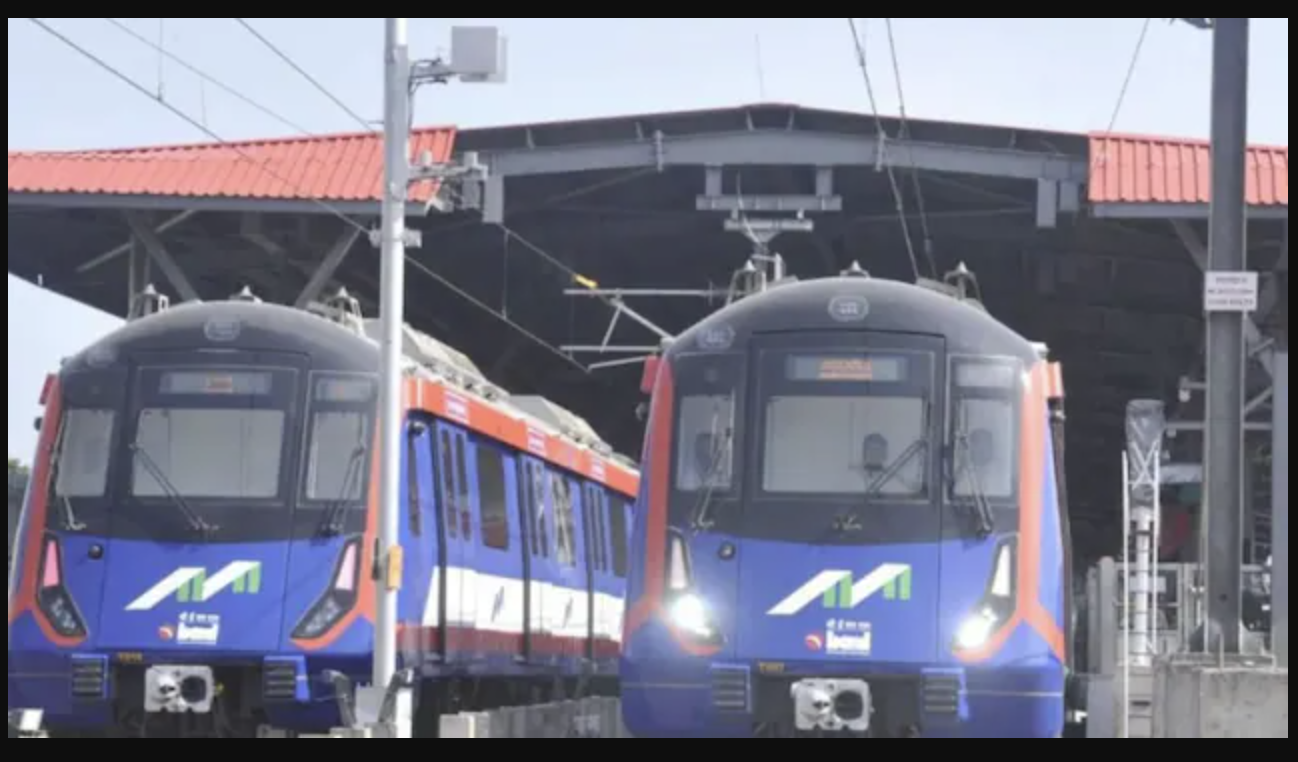
In a major step toward commissioning India’s first Regional Rapid Transit System (RRTS), the National Capital Region Transport Corporation (NCRTC) announced that Namo Bharat trains have successfully completed full-corridor trial runs from Sarai Kale Khan (Delhi) to Modipuram (Meerut)—an 82-km stretch—in under one hour.
During the trial held on Sunday, the trains reached speeds of 160 kmph while halting at all stations, demonstrating full operational efficiency and readiness.

India’s First Integrated Metro & RRTS System
What makes the Delhi-Meerut corridor unique is its dual-use infrastructure: it is the first time in India that metro and regional high-speed trains are operating together on shared tracks.
The Meerut Metro, part of the RRTS project, ran parallel trials with 13 stations on an 18-km elevated and 5-km underground section. This seamless integration is expected to boost urban and regional mobility across the National Capital Region (NCR), offering commuters fast, frequent, and comfortable travel options.
Advanced Signalling System Sets Global First
A standout feature of the corridor is the deployment of the ETCS Level 3 hybrid signalling system over an LTE communication backbone—a first-of-its-kind globally. This high-end system is integrated with platform screen doors (PSDs) at every station, significantly improving safety and operational efficiency.
According to NCRTC, the signalling system performed flawlessly throughout the trial run, further ensuring the corridor’s technical preparedness.
Current Status and What’s Next
So far, 55 km of the RRTS corridor with 11 stations is operational and open to the public. Work is progressing on the remaining 4.5 km stretch in Delhi (between Sarai Kale Khan and New Ashok Nagar) and a 23-km stretch in Meerut.
With successful full-corridor testing complete, the Delhi-Meerut Namo Bharat line is poised for full commissioning, transforming NCR’s public transport landscape.
Conclusion
The Namo Bharat RRTS project is not just an infrastructure milestone—it’s a vision of the future of high-speed, sustainable urban commuting in India. With advanced tech, reduced travel time, and metro-level integration, Delhi to Meerut in under an hour is no longer just a dream—it’s nearly a reality.