The Commission for Air Quality Management (CAQM) has imposed Stage III restrictions of the Graded Response Action Plan (GRAP) in Delhi and adjoining NCR cities after the air quality index (AQI) reached the ‘severe’ category for the first time this winter. The move comes as Delhi’s 24-hour average AQI touched 428 on Tuesday, posing health risks to even healthy individuals.
Construction Ban, Vehicle Restrictions, and School Curbs
Under GRAP Stage III, all construction and demolition activities—except for critical infrastructure projects—are banned across Delhi-NCR. In addition, the use of BS-III petrol and BS-IV diesel four-wheelers has been prohibited in Delhi, Gurugram, Faridabad, Ghaziabad, and Gautam Budh Nagar.
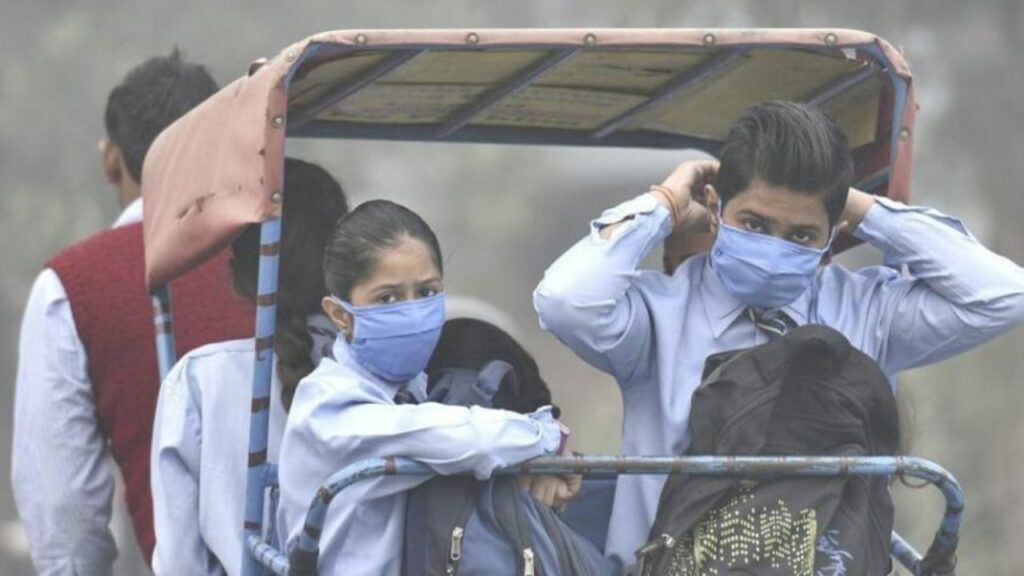
The CAQM has also ordered that classes up to Grade 5 be conducted in hybrid mode, allowing both physical and online sessions where feasible. State governments have been instructed to implement restrictions immediately, with enforcement to begin once official orders are issued.
Existing restrictions under earlier stages of GRAP, including dust control, waste burning bans, and vehicle emission checks, will remain in force.
Severe Pollution and Government Response
According to the Central Pollution Control Board (CPCB), pollution levels in the ‘severe’ category can cause respiratory distress among healthy people and significantly impact those with pre-existing illnesses. The air quality is expected to improve slightly to the ‘very poor’ range by Wednesday, according to official data.
Delhi Chief Minister Rekha Gupta said her government is strictly enforcing all measures, including hybrid schooling and vehicle checks. She also emphasized that pollution in Delhi is heavily influenced by activities in neighbouring NCR cities, adding that the government is working in “mission mode” to address the crisis through water sprinklers, road sweeping, dust mitigation, and smoke control initiatives.
A Recurring Winter Crisis
Each winter, Delhi’s air quality deteriorates sharply due to stubble burning, vehicular emissions, and construction dust, coupled with stagnant weather conditions. The latest measures aim to limit further deterioration and protect public health while authorities monitor the situation daily.