Delhi’s air pollution crisis has once again come under the spotlight after the federal government revealed alarming health data in Parliament. Between 2022 and 2024, more than 200,000 cases of acute respiratory illnesses were reported across six major state-run hospitals in the capital. Of these, over 30,000 patients required hospitalisation, highlighting how dangerous the city’s air has become.
Toxic Air & Rising Health Burden
Delhi’s air quality has been deteriorating for years, but recent winters have brought some of the worst pollution levels on record. For weeks, the Air Quality Index (AQI) in several parts of the city has been more than 20 times the WHO-recommended limit, primarily due to PM2.5 — fine toxic particles small enough to enter the bloodstream.
Government data shows:
- 67,054 respiratory cases in 2022
- 69,293 cases in 2023
- 68,411 cases in 2024
Doctors say these numbers reflect only those who reached hospitals — many more continue suffering silently at home.
What’s Driving Delhi’s Pollution Crisis?
There is no single cause behind Delhi’s recurring smog. Instead, it is a dangerous cocktail of environmental and human factors:
- Industrial and vehicular emissions
- Winter temperature dips that trap pollutants near the ground
- Low wind speeds prolonging the smog layer
- Seasonal stubble burning in Punjab and Haryana
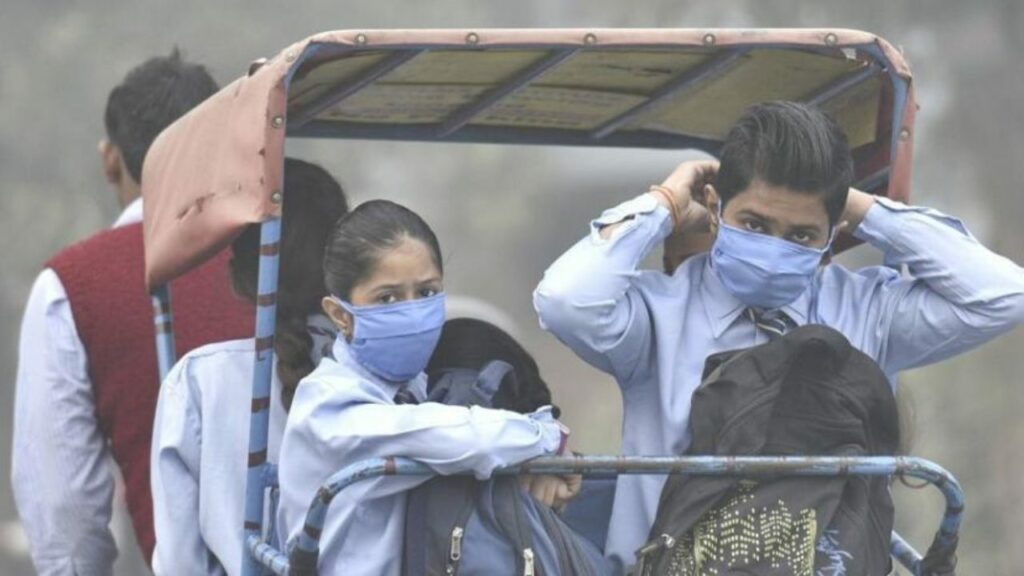
The combination creates a toxic environment especially harmful for children, the elderly, and people with asthma or heart disease.
Hospitals Overwhelmed, Children Most Affected
Medical facilities across Delhi-NCR have reported a sharp rise in children visiting emergency rooms with breathing difficulties, persistent cough, and wheezing. Some hospitals have had to increase pediatric respiratory care capacity. Doctors warn that prolonged exposure can impair lung development in children.
Though the government acknowledges a correlation between pollution spikes and rising respiratory cases, it stated that the available data cannot conclusively prove causation — a caveat that experts say does not diminish the urgency.
Courts Step In as Pollution Levels Stay Hazardous
Delhi’s AQI repeatedly breaches the “severe” 400+ category, where even healthy individuals may experience breathing discomfort. As AQI hovered around 380 this week, the Delhi High Court prepared to hear a plea demanding urgent measures to curb pollution.
India’s Supreme Court, too, has frequently intervened, calling the situation a “public health emergency.”