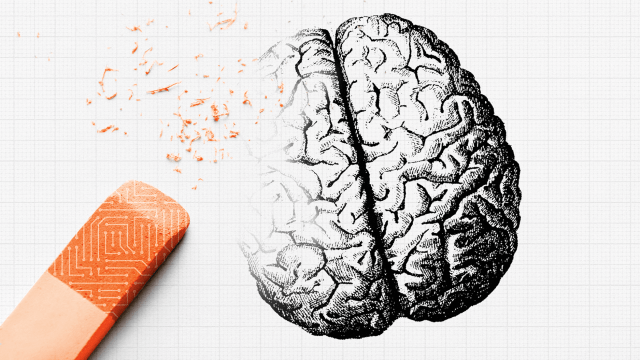
A recent study by MIT’s Media Lab has raised serious concerns about the impact of generative AI, especially ChatGPT, on users’ cognitive engagement and learning. The research involved 54 Boston-area participants aged 18–39, divided into three groups. Each group was tasked with writing SAT-style essays using ChatGPT, Google Search, or no tools at all, while their brain activity was tracked via EEG. Results showed that ChatGPT users consistently underperformed, demonstrating the lowest levels of neural engagement, linguistic quality, and behavioural effort. Over time, many became increasingly passive, relying heavily on copy-paste methods.

AI in Education: Help or Hindrance to Deep Learning?
Lead author Nataliya Kosmyna emphasized the urgency of publishing the findings ahead of peer review, warning against prematurely introducing AI into early education. Her team observed that essays written with ChatGPT lacked originality and were often called “soulless” by teachers. EEG results revealed low activity in brain regions tied to creativity, memory, and semantic processing. In contrast, participants who wrote without AI showed the highest brain connectivity and engagement, while those using Google also performed well and reported higher satisfaction.
When asked to rewrite essays without AI, ChatGPT users remembered little of their work and showed weak brainwave activity, indicating shallow learning. However, those who initially wrote without AI and later used it showed significant brain improvements, suggesting that AI, when used after foundational thinking, might support learning rather than hinder it.
Cognitive Risks of AI: Beyond Writing to Programming and Policy
Kosmyna’s concerns extend beyond writing. She is now researching the effects of AI on programming skills and early findings suggest even deeper cognitive decline. Experts like psychiatrist Dr. Zishan Khan echo her concerns, warning that overreliance on AI may weaken memory, resilience, and cognitive development—especially in young users.
Ironically, many online users summarized Kosmyna’s paper using AI tools, despite hidden traps designed to reveal such shallow processing. As AI use grows, the study urges caution, legislation, and deeper evaluation before AI becomes mainstream in education and work.
Summary:
An MIT study warns that frequent ChatGPT use may reduce critical thinking, creativity, and memory, especially in young users. Essay writers relying on AI showed low brain activity and learning retention. Experts urge caution, regulation, and thoughtful integration of AI in education to avoid long-term cognitive decline and shallow processing.