On Thursday, the government informed the Lok Sabha that the number of bird-hit incidents reported at the country’s airports jumped to 1,782 last year from 1,278 recorded in 2024.
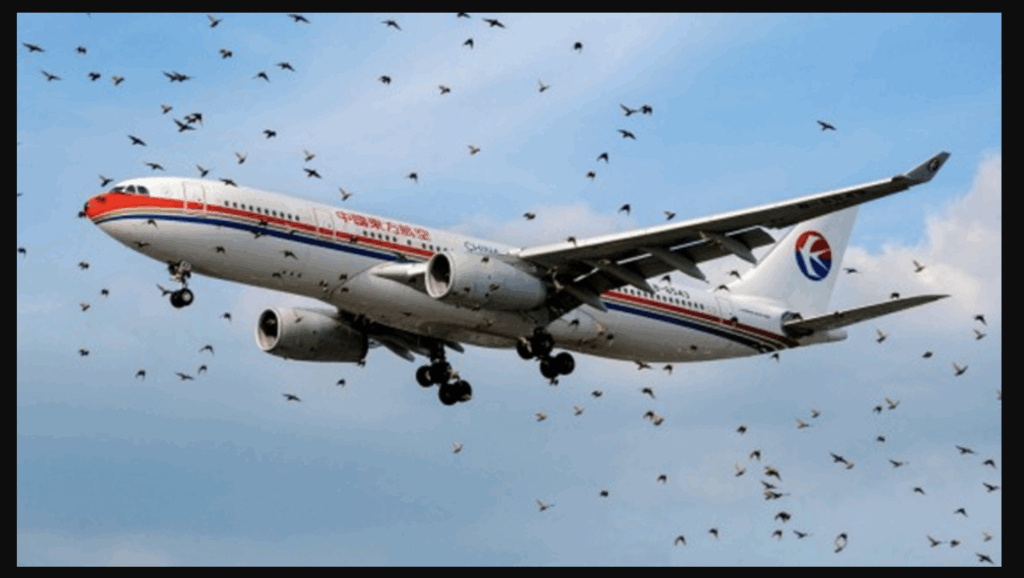
Huge Rise In Bird Hit Incidents At The Airports
This is significant as several times, bird hits cause significant damage to the aircraft.
When it comes to these kinds of issues, the Directorate General of Civil Aviation (DGCA) has regulations and guidelines in place for the management of potential wildlife hazards at licensed airports.
As many as 6,337 bird-hit incidents were reported at the airports in the country in the last five years, as per data provided in a written reply by Minister of State for Civil Aviation Murlidhar Mohol.
Last year, the count of such incidents stood at 1,782 and remained at 1,278 in 2024. It was 1,371 in 2023, 1,131 in 2022 and 775 in 2021.
In response to these incidents, the operators of licensed airports have developed Wildlife Hazard Management Plan (WHMP) as well as procedures to identify main causes of bird-hit incidents.
The Airfield Environment Management Committees (AEMC) are constituted at airports to identify sources of wildlife hazards and to take necessary steps to control the same among other efforts.
Analysts Warning Unresolved Ecological Risks
Just a week ago, media reported a similar kind of incident where Green groups said they were keeping their fingers firmly crossed as passenger flights began operating from the Navi Mumbai International Airport (NMIA), warning that unresolved ecological risks could yet collide with aviation safety.
It appears that the environmentalists have pointed to cautions raised years ago by the Bombay Natural History Society (BNHS).
In this they have flagged that large-scale destruction of wetlands around the airport, stretching from Panje to Nerul, would displace birds from their traditional habitats and push them towards the high ground of the aerodrome and into aircraft flight paths.
Interestingly, the project authorities led by the City and Industrial Development Corporation (CIDCO) leased out major wetlands in Uran to Navi Mumbai Special Economic Zone (NMSEZ) and the Jawaharlal Nehru Port Authority (JNPA) despite these warnings, resulting in water bodies being filled and effectively erased, said Nandakumar Pawar, the environmental group Sagar Shakti director.
Moving ahead, Pawar said that the fallout was already visible on the ground, with flamingos and other migratory birds shifting regular destination to the remaining wetlands in Nerul, including the DPS Lake, NRI and TS Chanakya lakes, while sightings of the pink birds in Uran sharply declined.