Considering the work culture, it has long been treated as moral currency and the longer the hours, the greater the virtue.
While in modern economies, exhaustion often signals commitment and productivity is measured in time spent, not outcomes delivered.
Reducing The Workweek
The same is witnessed in the corporate world of India which has always clapped for the ones who have traded sleep and sanity to walk more miles than the KRAs.
Although now this belief has found powerful defenders as the business leaders like Infosys co-founder Narayana Murthy have argued that young professionals should work 70 hours a week to fuel national growth.
According to them, progress demands sacrifice, and rest is secondary.
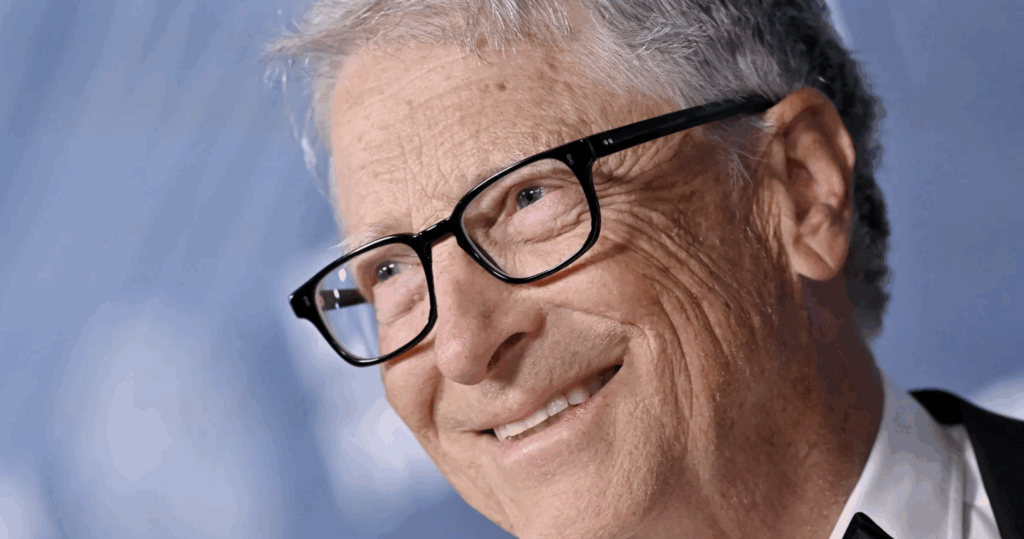
Contrary to this, Bill Gates offers a radically different idea, one that does not glorify longer hours.
His idea actually questions the need for them at all as the Microsoft co-founder believes artificial intelligence could reduce the standard workweek to just two days within the next decade.
This is not an experiment, but a structural shift as his argument is simple – if machines can perform most routine tasks, human labour becomes less essential.
Why Would This Happen?
This is not the first time Gates has spoken about this vision repeatedly and the most recent was during an appearance on The Tonight Show.
His comments have resurfaced as AI tools move rapidly from novelty to necessity and argues that AI can address workforce shortages in critical sectors.
It appears that the healthcare domain could see wider access to medical advice through intelligent systems.
Other domains like education can be reshaped by high-quality digital tutors and the domains like manufacturing and logistics may function with minimal human involvement.
Nowadays time has become the new surplus so the idea of a two day workweek is quite entertaining.
This is not a new idea for Gates as earlier in 2023, he suggested a three-day workweek was plausible, during the early public adoption of tools like ChatGPT.
Now AI has changed its pace as automation is advancing faster than expected.
So far the tasks which were once thought uniquely human are already being replicated.
The tasks which are remaining are not labour but judgment, creativity, and oversight, Gates believes, rest can be automated.
There is a sharp contrast as one side is the traditional work ethic, work longer, endure more, and measure worth in hours and the other side is a technological vision.
As he says, let machines absorb the burden while humans reclaim the time.
It is noteworthy here that technology alone does not decide outcomes, as productivity gains do not automatically translate into freedom.
But it calls for policy and cultural change as fewer workdays could remain a privilege rather than a right.
Considering the history, caution is must as the past technological revolutions promised liberation from labour as most delivered higher output instead.
There is risk as AI may compress work into fewer hours, only to raise expectations within them.
In the meantime, Gates remains optimistic as he sees AI as a chance to redesign work from the ground up, not to extract more effort, but to demand less of it.