The Bhopal Metro project, once envisioned as a symbol of progress for Madhya Pradesh’s capital, has instead turned into a cautionary tale in urban planning and execution. A recent viral video exposes glaring engineering flaws and poor planning that have caused significant project delays, public inconvenience, and unnecessary financial losses.
Engineering Missteps That Sparked Outrage
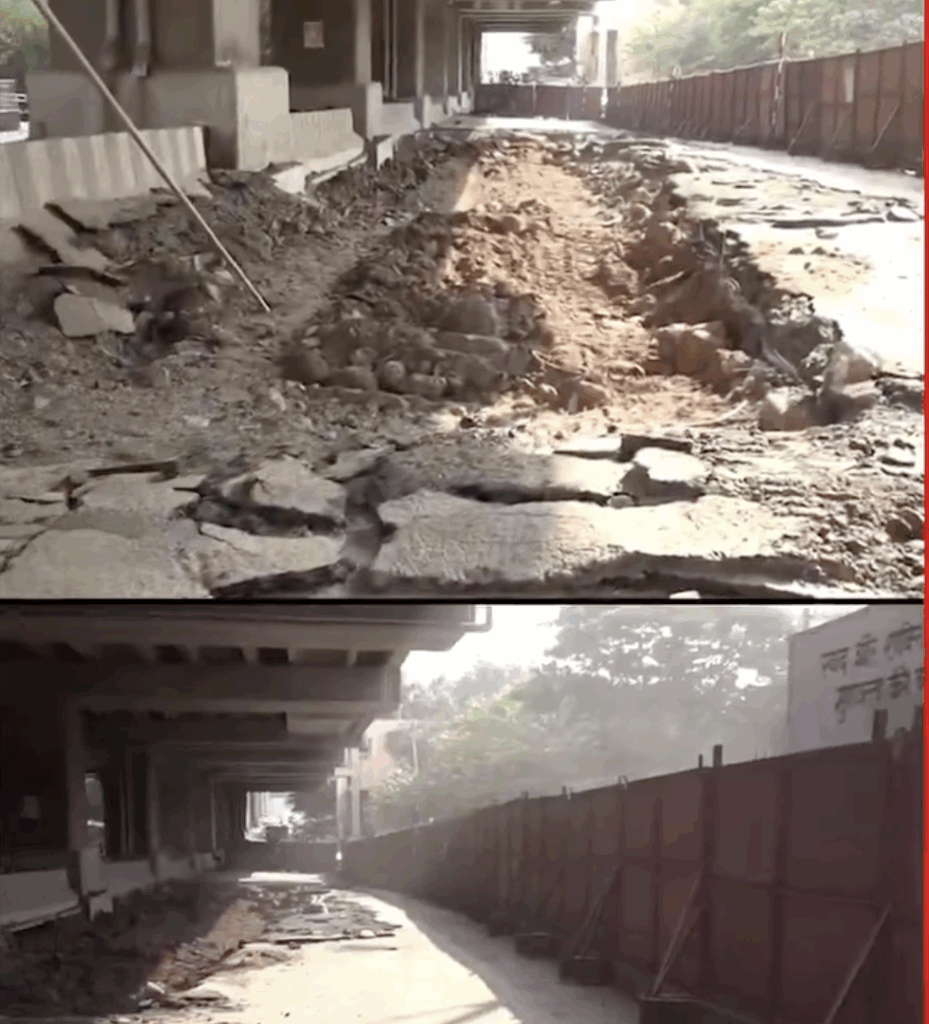
The most shocking revelation shown in the video involves a major height miscalculation between a newly built metro station and the adjoining road. After construction, vehicles frequently struck the station’s concrete underside due to inadequate clearance — a basic engineering oversight that went unnoticed until the damage became evident.
Authorities were forced to take corrective measures, including excavating the freshly built road to increase clearance. Ironically, this road had just been resurfaced at a high cost, leading to further waste of public funds and widespread commuter frustration.
Public Anger and the Accountability Question
For Bhopal residents, the metro—already delayed by years—has become a symbol of bureaucratic inefficiency and poor coordination. The video captures citizens’ frustration, with many blaming local authorities for negligence and lack of technical oversight. Each rework and delay adds to both the financial burden and the erosion of public trust in infrastructure projects.
A Wake-Up Call for Urban Planners
The Bhopal Metro fiasco underscores the urgent need for better project governance, inter-agency coordination, and technical auditing before execution. Urban planners must prioritize foresight, stakeholder consultation, and real-time supervision to prevent such costly blunders.
This incident is not just about one city—it’s a warning for all fast-developing metros in India. Without transparency and accountability, even ambitious public projects can collapse under the weight of poor planning.