Shoot for the moon, they said. That way, even if you miss, you land amongst the stars!
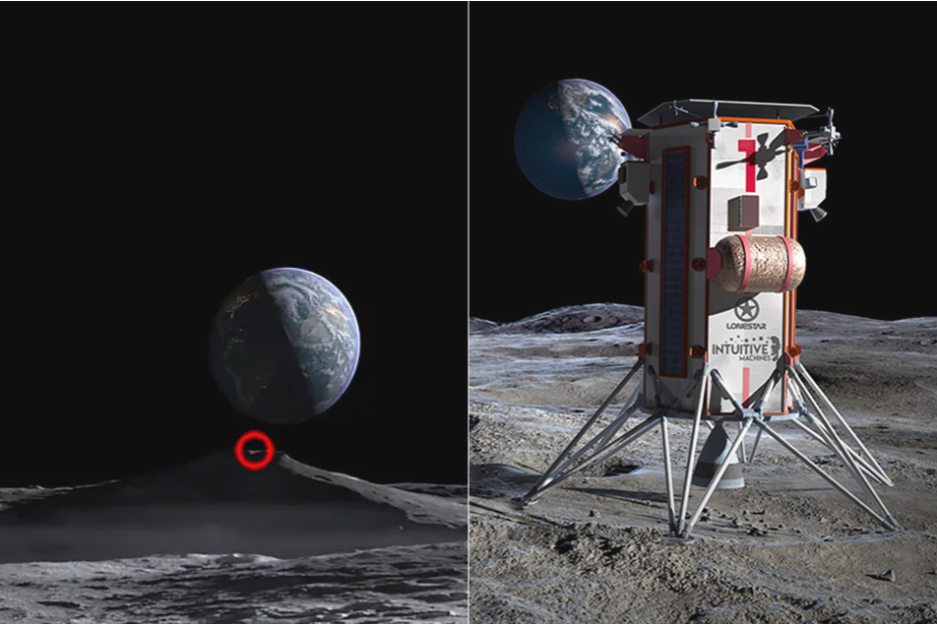
AI Infrastructure in Space
As tech giants set their sight on the moon, I guess this motivational line would soon be reality, only exception being that the target in this case is indeed the moon!
Reason? Planet earth running out of room as well as resources for AI!
Recently, tech giant Google unveiled Project Suncatcher, its ambitious moonshot idea, aiming to build data centres in space in order to overcome Earth’s limited resources.
And if you think Google is going gaga, then it’s not the case since there are others which include the likes of Starcloud, Lonestar Data Systems, and Axiom Space, that are exploring to expand the infrastructure for AI and machine learning beyond the planet in order to meet the continuous demand for energy as well as cooling. Notably, in the orbit, these machines can harness the sun’s energy directly, unlike earth where resources are limited and demand is more.
Human Expansion Beyond Earth
Notably, there are others like Jeff Bezos who are talking expansion of human life beyond our planet.
During a conversation and talking about environment, he said that the world has progressed in almost every quality-of-life metric and said “Almost everything is better today than it was,” adding “except the environment.” With nature under stress and the planet Earth only one we have, we cannot keep the industrial expansion as it would push the planet’s limits.
He added that humans and their innovation cannot keep destroying the planet and one day, these factories and data centres have to be moved away from Earth. This would start with the Moon and orbital stations. The central idea of this ordeal is to reserve Earth only for living.
Coming back to Google and their project Suncatcher, then the company is simply testing running AI in orbit could ease energy pressure on Earth. As understood earlier, the intention and broader vision behind the same is to tap into the space for power as well as infrastructure without overwhelming the planet, which is already strained.
Speaking at an Italian Tech Week last month, Bezos said millions of people could be living in space by the 2040s, supported by AI systems and robots handling off-planet work. “In the next couple of decades, I believe there will be millions of people living in space,” he said, adding that many would do it simply because they want to — not because Earth has become unliveable.
He is not alone as other tech leaders also share the same ambitious views about space.
The CEO of OpenAI, Sam Altman, predicted that the future graduates could land high-paying jobs in space. Elon Musk believes humans will reach Mars by 2028, while companies like Blue Origin and SpaceX are building rockets, landers and orbital habitats. In their view, space isn’t an escape, it’s expansion.
Summary
Tech giants are taking AI and human ambition beyond Earth. Google’s Project Suncatcher and others plan space-based data centers to harness solar energy and ease resource strain. Leaders like Jeff Bezos, Elon Musk, and Sam Altman envision humans living and working in space, supported by AI and robotics. Space isn’t just escape—it’s expansion, innovation, and preserving Earth for life.