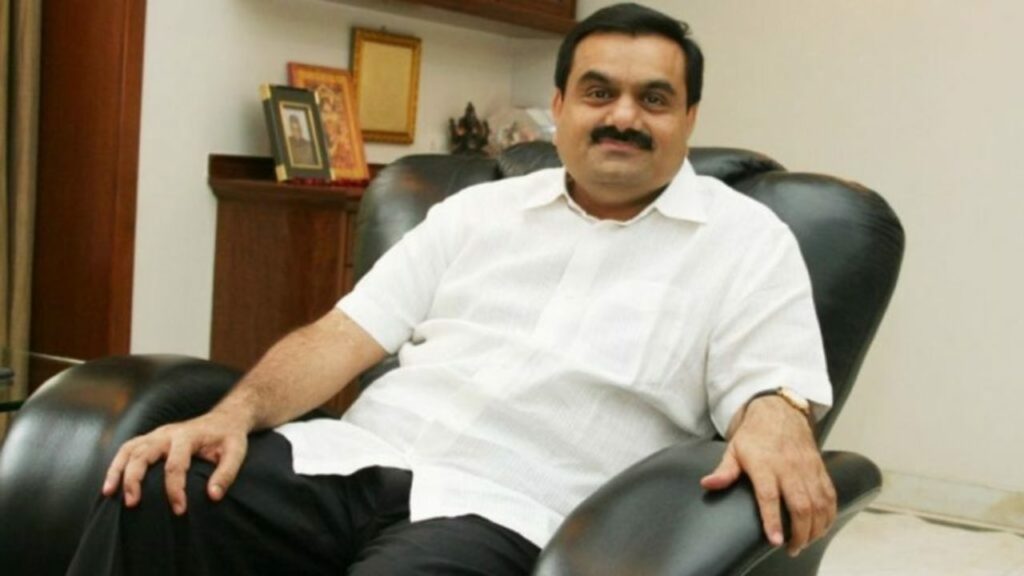
At the 5th Annual Conference of the Society for Minimally Invasive Spine Surgery – Asia Pacific (SMISS-AP) in Mumbai, industrialist Gautam Adani unveiled an ambitious vision to transform India’s healthcare landscape. He announced plans to build an AI-first, multidisciplinary healthcare ecosystem that prioritizes affordability, scalability, and global best practices. Highlighting a need for a system-wide redesign rather than incremental upgrades, Adani emphasized that the healthcare system must evolve with intelligence and empathy to meet future demands.
Adani’s Vision for Nation-Building Through AI-Driven Healthcare Temples
Recalling his family’s pledge of ₹60,000 crores towards healthcare, education, and skill development on his 60th birthday, Adani explained that their involvement in healthcare stems from a desire to accelerate progress. He cited low back pain—a leading cause of disability in India—as symbolic of deeper national health challenges. “To carry the weight of national ambition, we must first heal the spine of our people,” he urged, calling on spine specialists to serve as both healers and nation-builders.
A major part of his plan includes the establishment of Adani Healthcare Temples—1,000-bed integrated medical campuses in Ahmedabad and Mumbai. These campuses will be AI-first, modular, and rapidly scalable to address pandemics and emergencies. They aim to serve as centres of excellence for clinical care, research, and education, supported by design and innovation guidance from the Mayo Clinic.
Adani’s Blueprint for a Scalable, Inclusive, and AI-Driven Future for Healthcare
Adani’s healthcare vision is structured around five pillars: integrated care beyond silos, scalable infrastructure, AI and robotics-driven education, enhanced nursing and paramedical training, and human-centric insurance models. He also encouraged medical entrepreneurs to pursue frontier innovations like AI-based spinal diagnostics and rural surgical units.
Addressing systemic healthcare gaps in India, he noted the country’s shortage of medical professionals—only 20.6 per 10,000 people compared to the WHO’s benchmark of 44.5—and the stark urban-rural divide in healthcare access. These challenges demand radical redesign in how care is delivered and financed. Stressing the need for reform in medical training, Adani said future doctors must combine technical expertise with empathy and leadership. Concluding his address, he declared: “India cannot rise if her people cannot stand. And her people cannot stand without you. Let us build the backbone of a great nation.”
Summary:
Gautam Adani unveiled a bold plan to transform India’s healthcare with AI-driven, affordable, and scalable systems. He proposed 1,000-bed healthcare campuses, emphasized redesigning care delivery, and highlighted five core pillars including AI education and human-centric insurance. Addressing workforce shortages, he urged reforms to build a healthier, future-ready nation.