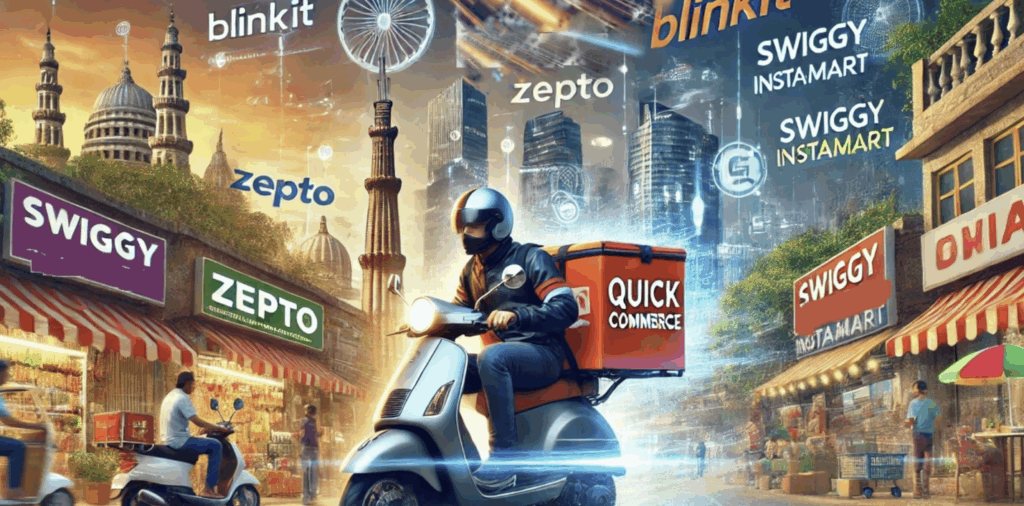
The debate over ultra-fast delivery services took a sharp turn in Parliament after Aam Aadmi Party leader Raghav Chadha demanded the termination of 10-minute delivery models run by quick-commerce platforms. Raising the issue during Zero Hour in the Rajya Sabha on December 5, 2025, he described the practice as “cruelty” towards gig workers who risk their lives to meet impossible deadlines.
“Delivery Executives Are Not Robots”
Speaking emotionally in the House, Chadha reminded lawmakers that delivery partners were also ordinary people with families.
“These people are not robots. They are someone’s father, husband, brother or son,” he said, urging Parliament to reflect on the human cost behind the convenience of instant deliveries.
He emphasised that while consumers expect food and groceries within minutes, worker welfare is being pushed into the background.
The Invisible Workforce Behind India’s App Economy
Chadha termed gig workers across platforms such as Zomato, Swiggy, Blinkit, Zepto, Ola and Uber as the “invisible wheels of the Indian economy.”
He pointed out the irony that quick-commerce firms have achieved unicorn valuations and billion-dollar revenues, while the workers delivering those profits continue to operate without basic employment security.
Three Major Risks: Speed, Harassment and Unsafe Work
1. Pressure of Speed
Chadha warned that 10-minute delivery targets force workers to overspeed, jump traffic signals and take unsafe routes. Fear of reduced ratings, incentive cuts, app logouts and account suspensions pushes them into risky behaviour daily.
2. Customer Harassment
He said even minor delays of 5–7 minutes lead to customer abuse, threats and poor ratings. These ratings directly affect a worker’s earnings for the entire month, creating constant anxiety.
3. Hazardous Working Conditions
Gig workers reportedly work 12–14 hours a day in extreme heat, rain and pollution without protective gear, insurance, or hazard allowances. Unlike factory workers, they lack fixed employment benefits, accident cover, medical security or basic labour safeguards.
Call for Policy Re-Thinking
Chadha’s intervention has reopened the broader conversation on regulating quick-commerce delivery timelines and strengthening labour protections for app-based workers. While the sector continues to grow rapidly, questions around sustainability, safety and worker dignity are becoming harder to ignore.
Whether Parliament will act on this demand remains uncertain, but the issue has now firmly entered the national policy discourse.