This Tuesday, the Centre approved sweeping reforms to its Transit Oriented Development (TOD) policy along metro and rapid rail corridors while giving a major push to affordable housing and transit-linked urban growth.
Centre Easing TOD Norms
As per these latest norms, earlier existing land use restrictions have been removed, the minimum plot size requirement to avail the scheme has been reduced reportedly.
Basically, they need to earmark the 65 per cent of the total floor area ratio (FAR) of the built-up area (BUA) for small residential units, and a single window system for speedy clearances has been approved.
Here mentioned, FAR and BUA are real estate metrics where BUA is the total area of all floors in a building and FAR is the ratio of BUA and the plot size of that building, indicating the construction density.
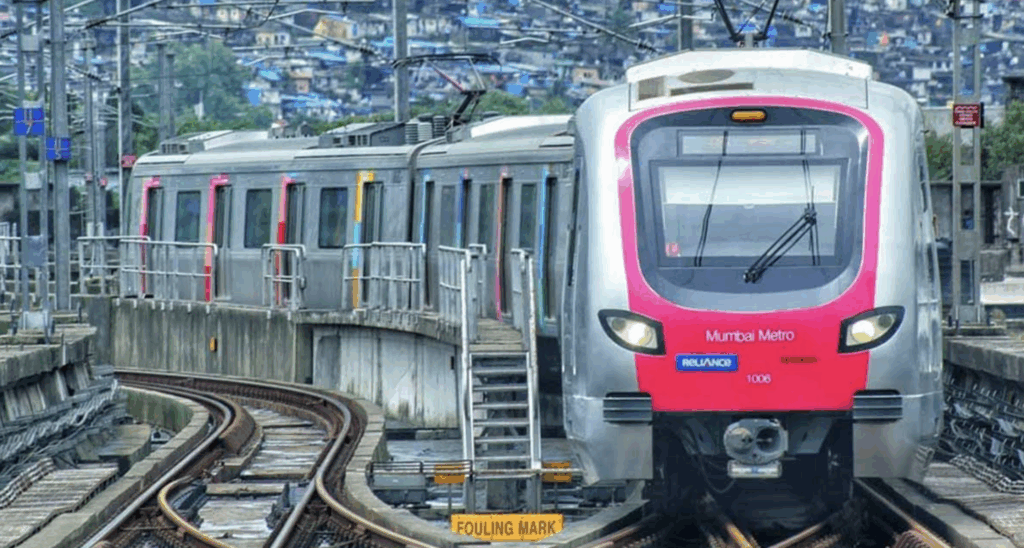
A 500-metre area on both sides of any metro line will be known as “TOD Zones” where the scheme will be implemented along the transit corridor, said the officials.
This has changed as prior to this, the minimum requirement for developing a residential plot under the TOD scheme was 1 hectare of land.
But now, this requirement has been reduced to 2000 square metres, said Sarvana Kumar, DDA vice-chairman.
Besides this, they removed the use of the mix land restrictions indicating that the TOD zone, alongside housing, businesses can also operate, but there is a cap on the space.
In addition to this, a maximum FAR up to 500 is permitted in TOD Zones on plot sizes of 2,000 sqm and above, with an 18-meter road.
In simple words, if one has a plot of 2000 sqm next to an 18-meter-wide road in a TOD zone, then the entity would have the permit to build floor space five times the plot size.
65 pc Reserved For Housing along Metro Corridor
Moving ahead, Kumar said, “65 per cent of total permissible FAR has been mandatorily earmarked for residential use with a housing unit with built-up area of 100 sqm, thereby providing for affordable housing along the metro corridor.”
With this restriction, they want to ensure that on the total space, 65 per cent of it has to be reserved for housing.
While the rest 35 per cent of FAR, 10 per cent is to be used for the provision of commercial and amenities for the housing area, the policy states.
The Centre has also constituted a TOD committee which will give sanctions under the policy, and it will have the mandate to clear any proposal within 60 days of receiving it, this way helps in boosting ease of doing business.
According to the DDA officials, “The policy envisages a high-density, mixed-use planned development specifically aiming at the creation of affordable housing along all metro corridors.”
The TOD policy will even promote last-mile connectivity, as there is a provision to directly connect to a metro station under the policy, said ML Khattar, Union Minister for Housing and Urban Affair.
Further adding, “Under the plan, enhanced walkability for residents in the TOD plots, new underground, elevated pedestrian walkways can be provided for connecting to the metro stations.”