A recent survey indicates that nearly one in every four gig workers in India clock more than 70 hours each week.
On the other hand, fifty-seven per cent of workers report work hours exceeding 49 hours a week, mentioned in the same survey.
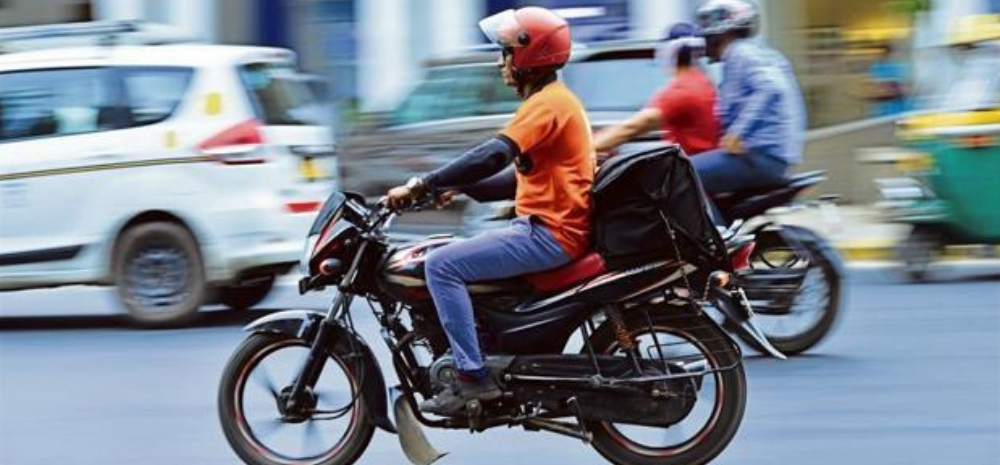
Government Stopping 10-Minute Deliveries
Interestingly, this survey comes against the backdrop of a conversation on the working conditions and earnings of gig workers triggered by a nationwide strike which was held on Christmas and New Year’s Eve last year.
It appears that the Central Government asked quick-commerce companies to stop advertising 10-minute deliveries, citing worker safety following the strike.
This Friday, the findings of the survey were released at an event organised by the non-profit Janpahal and Gig Workers Association at the Constitution Club of India.
During this event, there was a public screening of the film Zwigato, followed by a panel discussion on the gig economy, featuring RJD MP Manoj Jha, filmmaker Nandita Das, and gig workers Pooja, Mohd Irfan, Bhupendra Narayan Bhupesh, and Shiv Prajapati, and moderated by journalist Siddharth Vardarajan.
How Did This Happen?
Moving ahead, Jha said, “Platform companies are increasingly using app-based suspensions, algorithmic penalties, and intimidation to silence workers instead of engaging in meaningful dialogue.”
Further adding,“The practice of calling gig workers as partners is also an extraordinary example of the caste and class arrangements in our society. Similar to this, the practice of telling children to call their maids as aunties is an attempt to hide many discrepancies.”
This survey also highlighted that 62 per cent of gig workers had faced near-miss road accidents while working, while 27 per cent reported having met with traffic accidents during the course of their work.
According to the 34 percent of respondents, they had experienced harassment or violence while working on platforms, pointing to safety risks beyond road accidents.
While all these risks are involved, 44 per cent of workers reported having no accident insurance, and 62 per cent said they lacked health insurance coverage, as per the survey findings.
A total of 60 per cent of gig workers had received no safety training from platforms, while 56 per cent said they did not trust platform-run safety reporting systems.
Almost 84 per cent of respondents reported exposure to the extreme heat while most saying platforms provided little or no protection during heatwave conditions.
Please note that the findings of the survey are based on responses received from 1,000 platform workers belonging to 10 cities including Delhi, Mumbai, Kolkata, Bengaluru, Hyderabad, Bhopal, Agra, Lucknow, Jaipur, and Patna—between November 15 and December 30 in 2025.
In this survey, they have covered workers in four segments: food and grocery commerce delivery, quick commerce delivery, ride hailing, and household and personal work.
During this survey, they have conducted face-to-face interviews using a semi-structured questionnaire that included both open-ended and closed-ended questions.