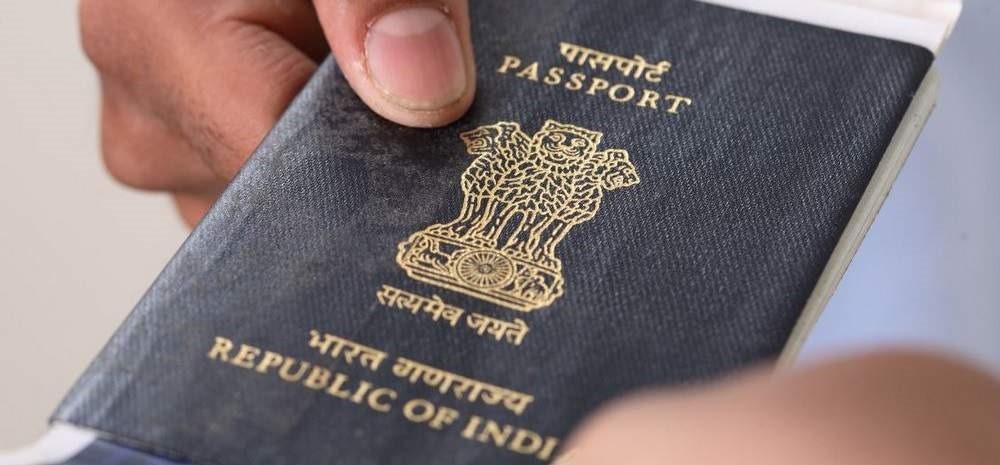
The government revealed that 2,06,378 Indians renounced their citizenship in 2024, continuing a trend of high numbers seen over recent years. Minister of State for External Affairs Kirti Vardhan Singh shared the data in response to queries in the Lok Sabha, highlighting that while some view the numbers with concern, the reasons for such moves are personal and vary widely.
A Decade of Increasing Outflow
Comparing recent figures to a decade ago shows a significant increase. In 2011, the number was 1,22,819, and in 2014, it was 1,29,328. But from 2020 onwards, the figures surged—85,256 in 2020, 1,63,370 in 2021, 2,25,620 in 2022, and 2,16,219 in 2023. The spike reflects growing global mobility, better career opportunities abroad, and lifestyle choices.
Government’s Perspective on the Diaspora
The Ministry of External Affairs stressed that the diaspora should be seen as a strategic asset. In an era shaped by the knowledge economy, overseas Indians are playing a key role in global networks, investments, and cultural influence. The government has been focusing on stronger engagement with the Indian diaspora, aiming to harness their expertise and networks for India’s growth.
Current Global Indian Population
According to government data, the overseas Indian population stands at 3,43,56,193, comprising 1,71,81,071 Persons of Indian Origin (PIOs) and 1,71,75,122 Non-Resident Indians (NRIs). This reflects India’s widespread presence across the globe, with contributions in diverse sectors such as technology, healthcare, business, and academia.
Why People Renounce Citizenship
While official data does not specify reasons, experts often point to factors such as better economic prospects, higher quality of life, education opportunities for children, and simplified global mobility. Additionally, some countries do not allow dual citizenship, compelling individuals to give up their Indian passport.