In a landmark digital transformation initiative, the Central government has successfully migrated all 12 lakh official email accounts — including those of the Prime Minister’s Office — from the National Informatics Centre (NIC) to a homegrown platform developed by Zoho, the Tamil Nadu–based software giant. This shift represents one of the largest government email migrations in India’s history, underscoring the nation’s growing commitment to technological self-reliance.
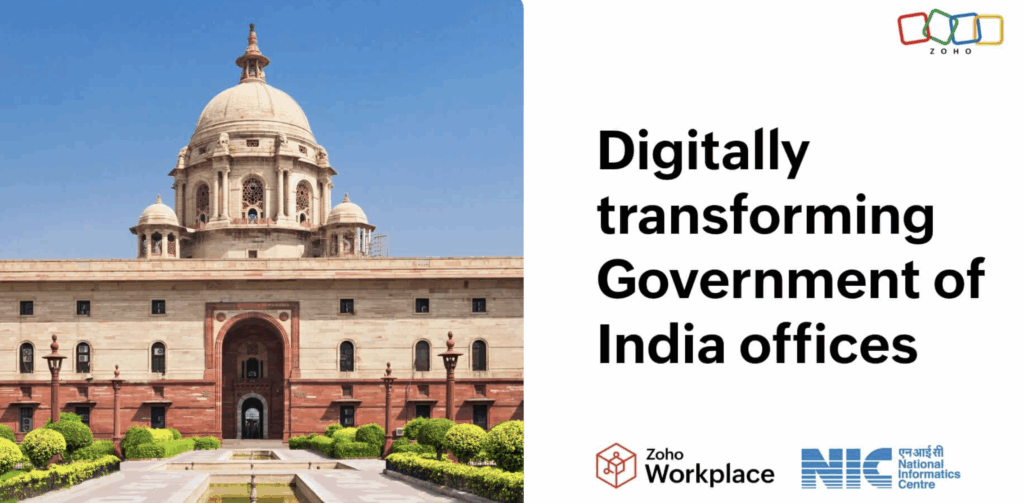
Officials confirmed that the migration was completed earlier this year, with Zoho’s cloud infrastructure now hosting and processing all government emails under the familiar domains nic.in and gov.in. The move follows a 2023 government contract awarded to Zoho for a seven-year period, after rigorous evaluation and security audits conducted by NIC and CERT-In.
The government’s motivation behind this shift is twofold — strengthening data sovereignty and reducing reliance on open-source or foreign platforms for document creation and collaboration. Zoho’s integrated office suite — featuring tools for word processing, spreadsheets, and presentations — is now fully embedded within the official email ecosystem.
The Ministry of Education’s circular described the change as part of India’s “broader vision of transforming from a service economy to a product nation,” emphasizing the Swadeshi movement in digital infrastructure. The government believes that using indigenous software will empower India’s technology sector and enhance data protection.
However, experts have cautioned that robust encryption and independent security audits must be ensured before expanding the suite’s use for sensitive communications, such as Cabinet documents. Former IAS officer K.B.S. Sidhu emphasized the need for “end-to-end encryption and independent vetting of data centres located on Indian soil.”
Zoho founder Sridhar Vembu, responding to concerns on X, reiterated that the company does not access user data, adding that “trust is far more precious, and end-to-end encryption is coming soon.”
Zoho’s selection came months after the 2022 AIIMS cyberattack, which exposed vulnerabilities in India’s digital infrastructure. Officials say this migration is a direct response to such incidents — a step toward ensuring that sensitive government data stays protected within India’s borders.
With this move, India has sent a clear signal — the path to Digital Atmanirbharta runs through homegrown innovation.