Earlier on December 25, Delhi government inaugurated 45 Atal Canteens marking the 101st birth anniversary of former prime minister Atal Bihari Vajpayee with the plans to expand this network to 100 canteens in the coming weeks.
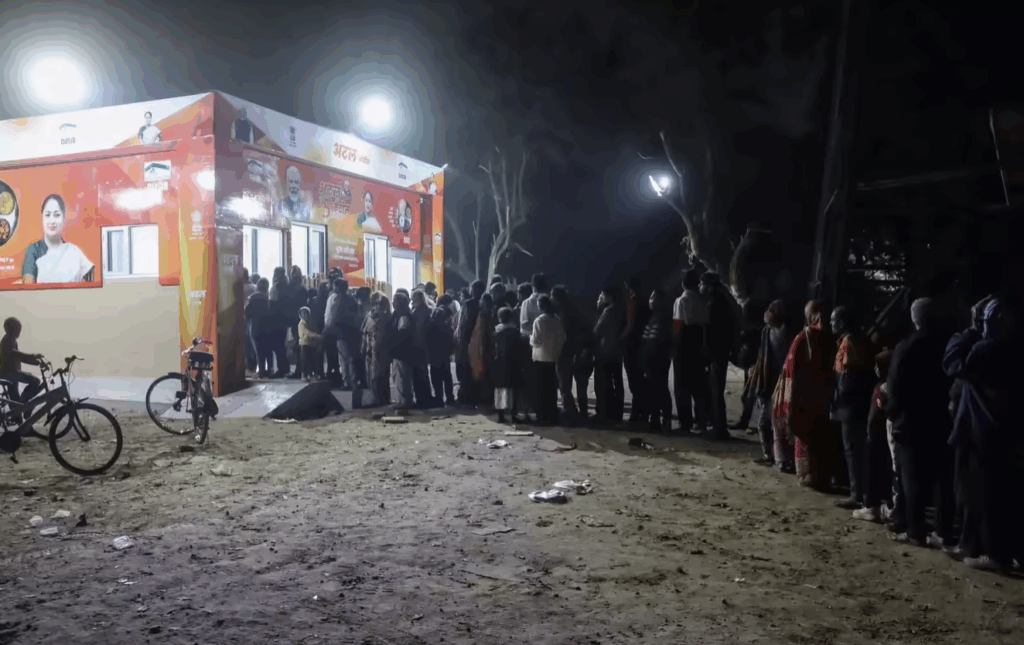
Rs 5 Atal Canteens Filling The Gaps For Thousands Of People
And its effect is overwhelming as it starts around 11.30am, long before the lunch rush hits Delhi’s markets, a quiet line begins to form outside a modest building in Lajpat Nagar.
The line is filled with construction workers, dust still clinging to their clothes, elderly men with walking sticks, sanitation staff on break — all wait patiently, clutching a Rs 5 coin.
All of them, looking towards the large steel vessels simmer with dal, stacks of rotis when the plates move swiftly across the counter.
All this is offered for the price of a bus ticket, they are serving a full meal in Atal Canteen — one of dozens opened across the capital in December.
This is part of the latest chapter in India’s growing experiment with government-run low-cost food canteens.
It appears that each of these canteens serves a cooked meal at Rs 5, a price the government describes as symbolic.
Basically, this scheme is designed to reach over one lakh people daily once fully operational, primarily daily-wage workers, migrants and the urban poor, said the officials.
On top of that, they standardized the meals for nutrition and scale – roti, rice, dal, seasonal vegetables served with pickles, offering 700–800 calories per plate along with 20–25 grams of protein.
These outlets serve these meals twice a day including lunch from 11.30 am to 2 pm and dinner from 6.30 pm to 9 pm.
Received Huge Response Immediately
Each of these canteens are expected to cater to nearly 1,000 people daily as their kitchens are equipped with LPG-based cooking systems, industrial RO water plants, digital token systems, CCTV surveillance and food quality testing mechanisms.
In addition to this, their raw materials and cooked food are to be tested regularly by FSSAI and NABL-accredited laboratories and the total budget allocation for the project stands at Rs 104.24 crore.
These outlets got immediate response within the first two days of launch as it served more than 33,000 meals across the newly opened canteens, underlining the scale of demand for affordable cooked food in the city.
All this started during 2019–20 when the Aam Aadmi Party government introduced the Aam Aadmi Canteen, later rebranded as Jan Aahar, promising meals at around Rs 10 through partnerships with NGOs and private kitchens rather than a permanent state-run network.
Similarly, BJP MP Gautam Gambhir launched a Jan Rasoi canteen in Gandhi Nagar, East Delhi — one of Asia’s largest wholesale garment markets — offering meals for as little as Rs 1 during lunch hours around the same time.
While talking about this scheme, a staffer at south Delhi’s Nehru Nagar, Rajeev Kumar Singh said,“The system is quite simple. People come to the counter, pay Rs 5 and receive an invoice. They show it at the next counter and are served a full plate.”
It appears that the response from the public has been very positive.
The canteens seem to have served 17,587 people across lunch and dinner on Thursday, while on Friday, 15,805 people ate at the outlets as per the official data.
While reacting to the broader model, Haryana chief minister Manohar Lal Khattar said, “The scheme is not merely a welfare programme, but a commitment to providing dignified support to citizens.”